
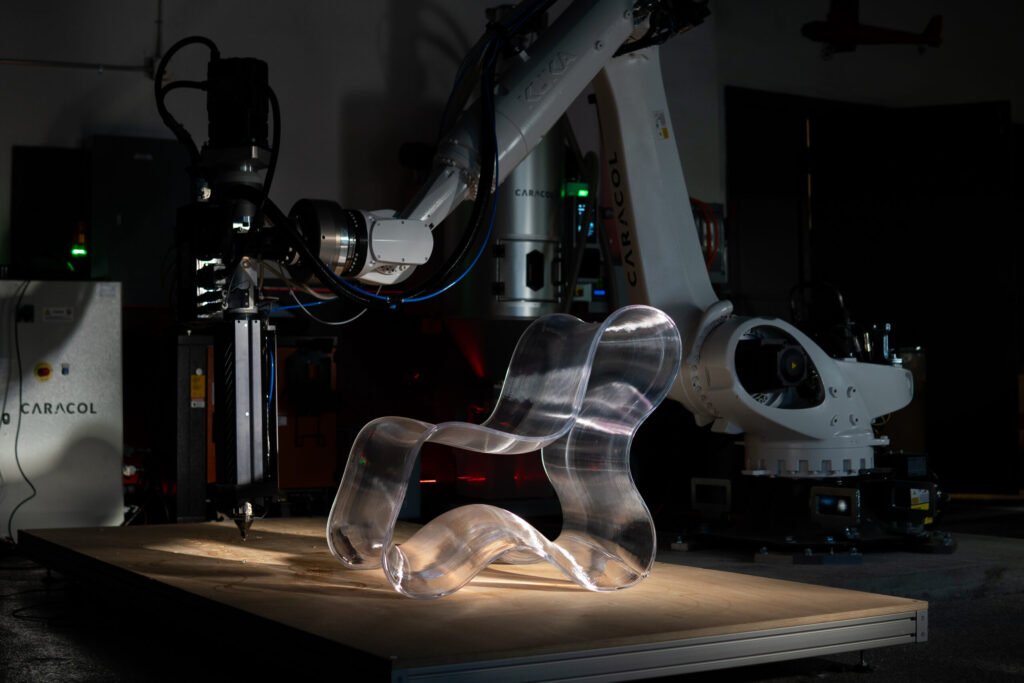
The first thing Adam Hecht will tell you is that 3D printing already has the technology. The harder part has been finding applications people actually want. That’s the gap Decibel Made is trying to fill.
“At Decibel, we had this mindset: let’s make this mainstream. Let’s not keep it in the back lab as something untouchable. You always hear about applications in defense and aerospace, but they’re usually projects you can’t really see or talk about publicly. Instead, we wanted to bring this kind of work into design, build a community around it, and get people genuinely excited.”
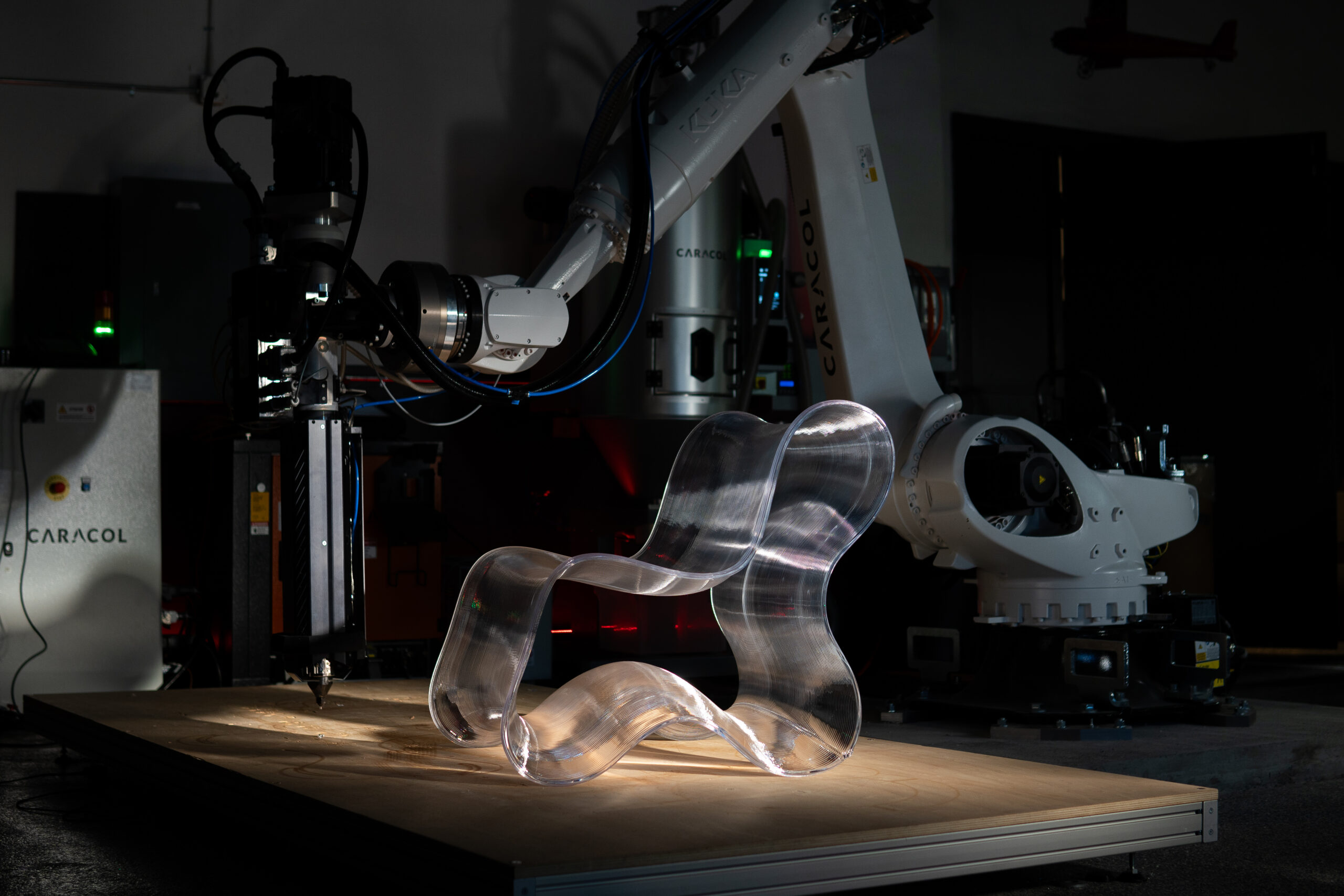
The Cloud Chair. Image courtesy of Decibel Made.
Decibel didn’t start as a furniture company. It traces back to DIVE, an earlier design studio working inside the 3D printing industry, helping materials companies, machine makers, and software platforms create applications they could actually show.
“We realized all these companies had really cool technology,” Hecht said. “But a lot of people didn’t know about it, and the companies actually using it often couldn’t talk about it. It was all kind of top secret.”
So Decibel stepped in as a “translator of sorts,” building projects that were meant to be visible.
That approach eventually evolved into something bigger. And today, the company focuses on the “built environment,” as Hecht described, including retail installations, architectural elements, and large-scale furniture designed for public spaces.
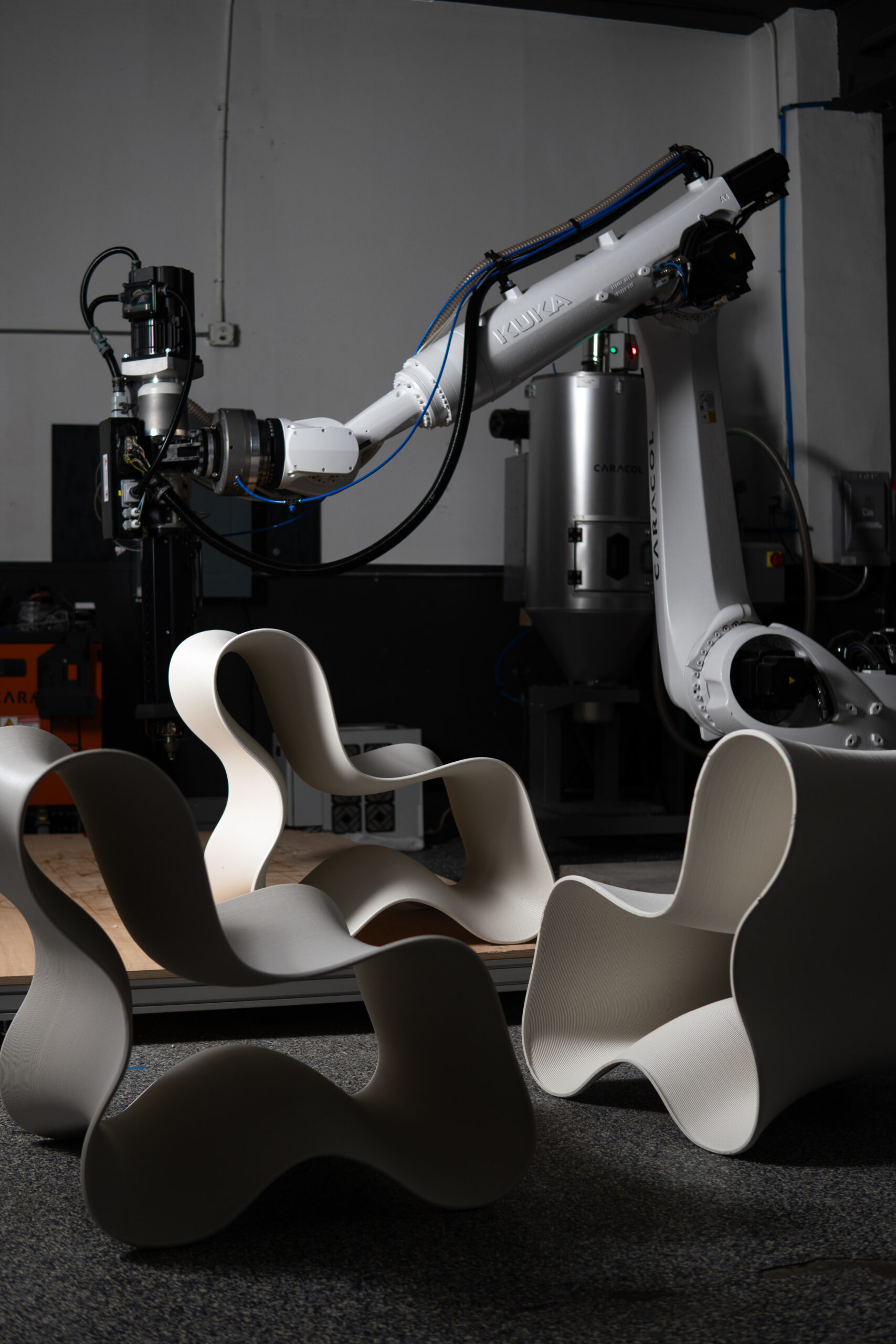
The Cloud Chair.
The Early Break
Before working with major retail brands, Decibel Made built its early visibility through a different kind of project.
The team first gained attention through 3DPets, a brand focused on 3D printed prosthetics for animals, which showcased how the technology could be used in real, functional products. That work eventually led to a global campaign with Apple for the iPhone 14, where the project was featured at scale, helping bring broader visibility to the team’s work across its early brands.
“That was the first big break, Hecht said. “From there, the focus shifted. Instead of working mainly with technology companies, we began applying that experience to more visible, design-driven projects.”
That’s where projects like the 3D printed benches Decibel created for a Lululemon store in New York come in, not as the starting point, but as a sign that brands were starting to see how this could work for them.
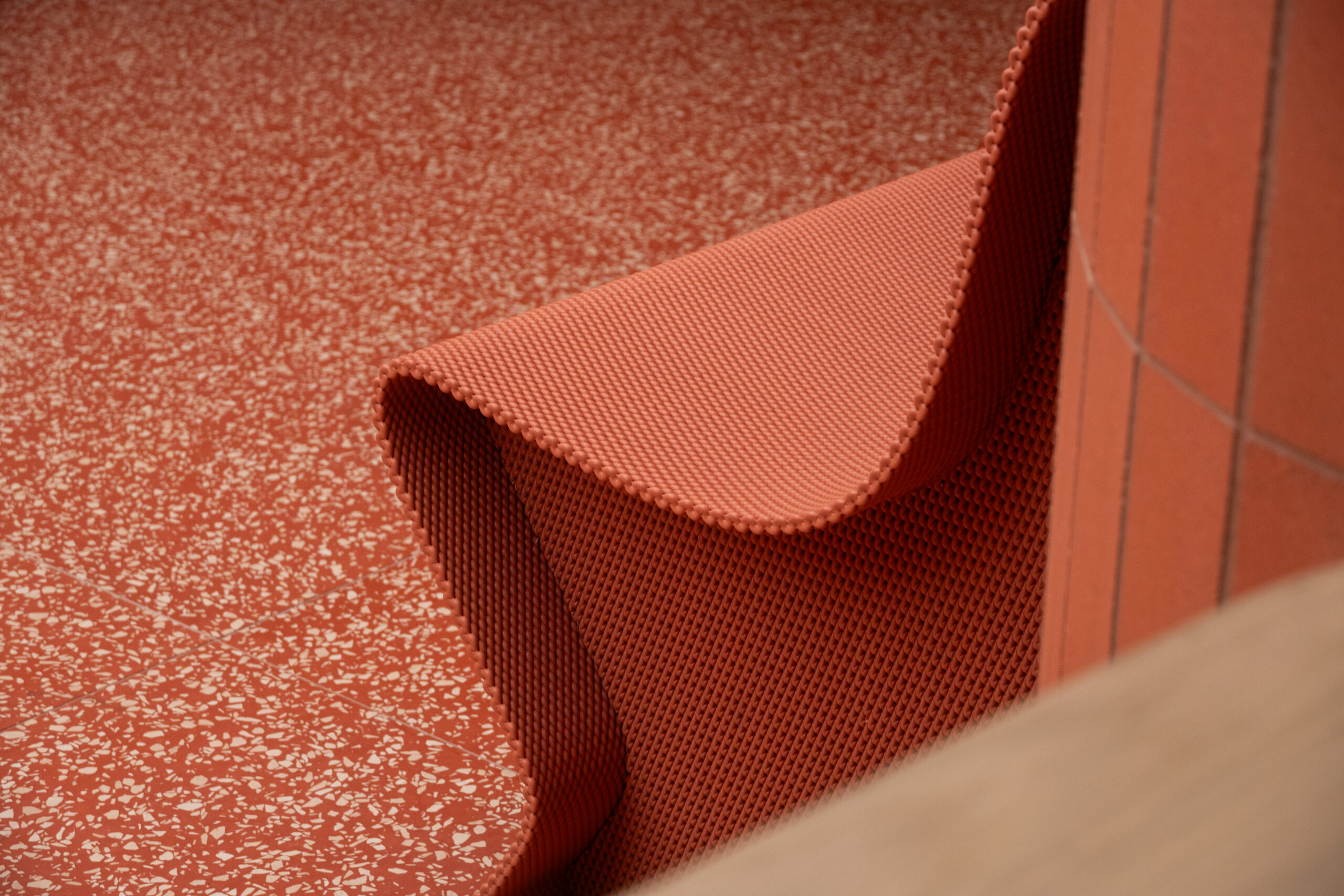
A 3D printed bench for Lululemon’s flagship store in NY, up close.
“It showed brands this is something they could actually see in their stores,” he indicated. “Our company’s momentum had been building for some time, but this move showed brands that this could actually fit into their world. Since then, we have expanded into other retail environments, working with major fashion brands, and now moving into entertainment spaces.”
https://www.linkedin.com/posts/3dprint-com_after-watching-caracol-am-present-at-endeavor-activity-7402491037690245121-kY6r?utm_source=share&utm_medium=member_desktop&rcm=ACoAAAJvbTMBHtNwXKodZzGdOV9PlNgk6Nzzbpg
Is This a Real Business?
The bigger question isn’t whether the technology works. It’s whether it holds up as a business, because for years, 3D printed furniture has often felt more like a showcase than a scalable business. The difference now, argues Hecht, is “intent.”
“We’re not just giving brands access to the technology. We’re combining that with real design. And that combination matters. Many early examples of 3D printed furniture were driven by engineering constraints rather than usability or aesthetics. The result was often pieces that were technically impressive, but not something a brand would actually use,” he went on. “You’ve seen 3D printed chairs at every trade show, and usually they’re not comfortable. They’re not designed. Decibel’s approach flips that.”


In fact, the company collaborates with experienced designers who are used to working on airports, large-scale interiors, and commercial spaces, and then adapts those ideas to what’s actually printable.
And one of the biggest advantages of 3D printing isn’t just design freedom. It’s iteration.
Traditional furniture making often requires expensive tooling before a final design is locked in. That makes it harder to refine things like comfort or structure. With 3D printing, the process is very different.
“We’re delivering pre-production samples in the final material,” Hecht remarked. “Not foam models. Not approximations. That means each version is closer to the final product and easier to improve.”
For large, custom projects, that iteration happens fast. Hecht told 3DPrint.com that Decibel can print a new version every day, refining and adjusting the design as it goes.
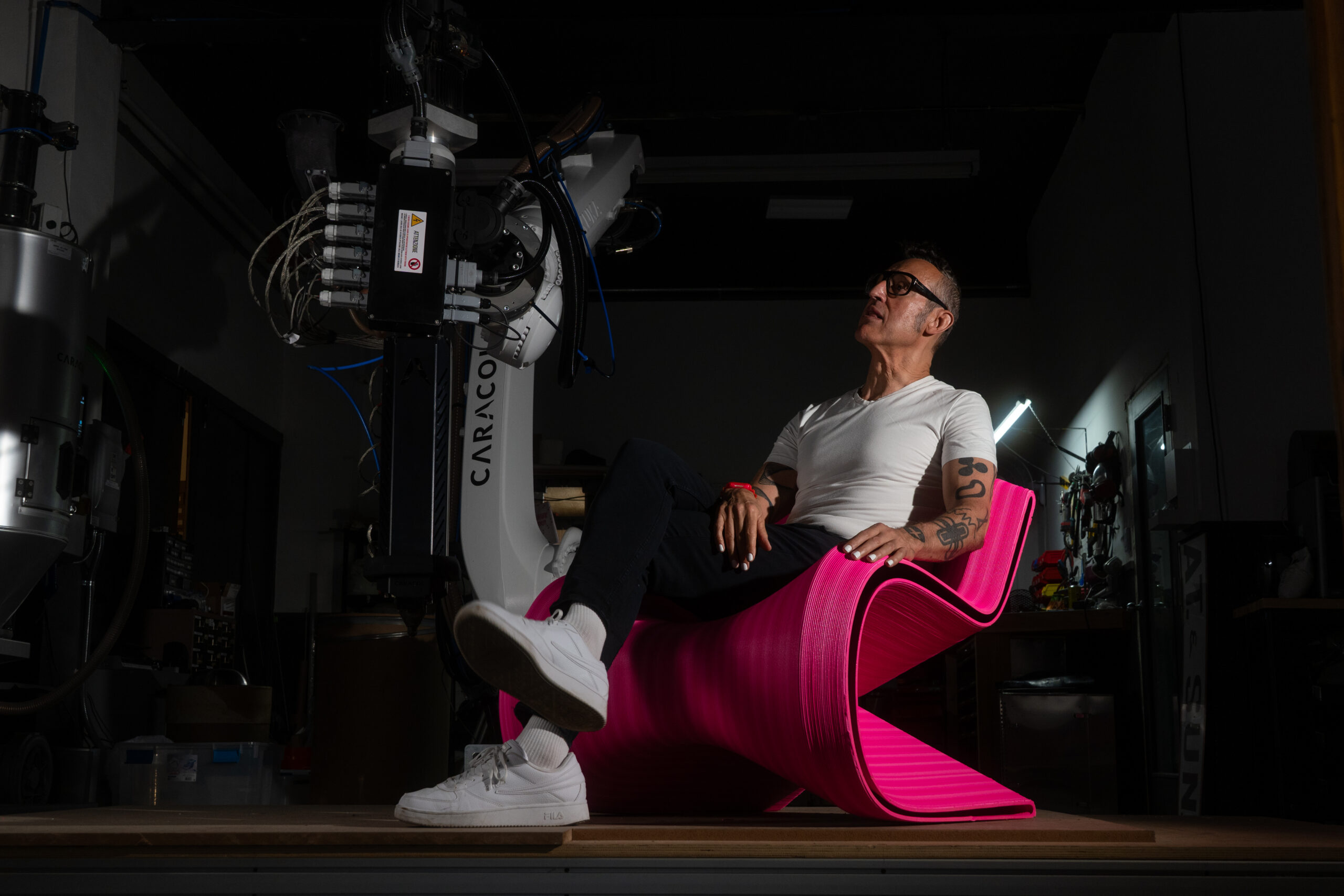
Monark Karim Rashid at Decibel Made’s factory.
The Real Bottleneck: Scale
If there’s one place where 3D printed furniture still struggles, it’s scale. Right now, Decibel is intentionally limiting itself. The company operates with a small number of systems, including a robotic large-format printer from Caracol, smaller pellet printers, and a traditional print farm. But that limitation is strategic.
“We’d rather not have enough printers than have too many and not know what to do with them,” Hecht said. “Instead of building capacity first, we are focusing on demand, working on high-design, high-visibility projects that create interest before expanding production.”
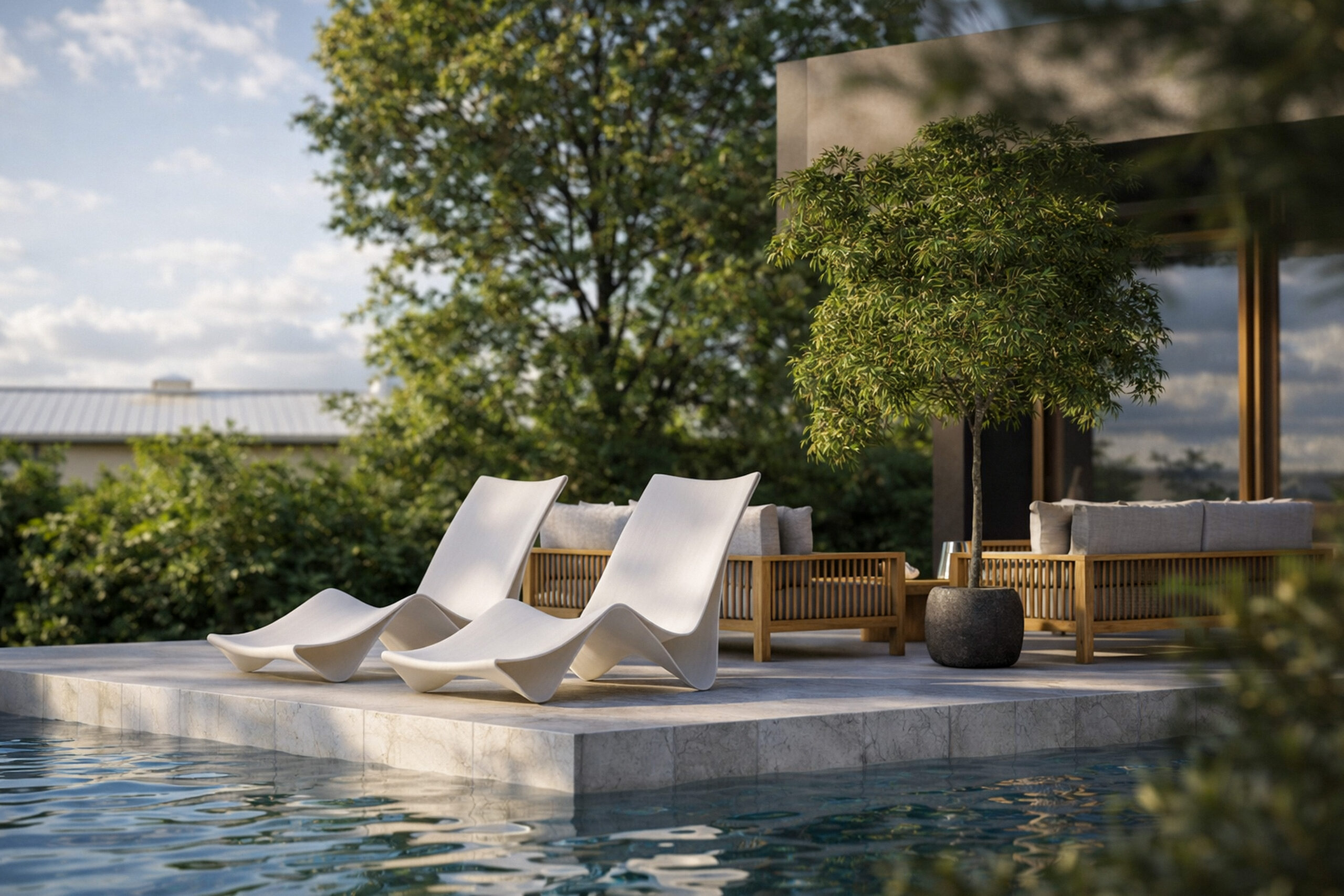
The Curva poolside chair.
So is this furniture? Architecture? Manufacturing? Hecht tells me the answer is: all of the above.
Hecht sees it this way: “It has to be a hybrid. Each project sits at the intersection of design, engineering, installation, and environment. It’s not just about making an object, it’s about how that object fits into a space, a brand, and a user experience.”
That’s why the company sees its future not just in furniture, but also in broader categories such as retail infrastructure, interiors, and architectural elements.
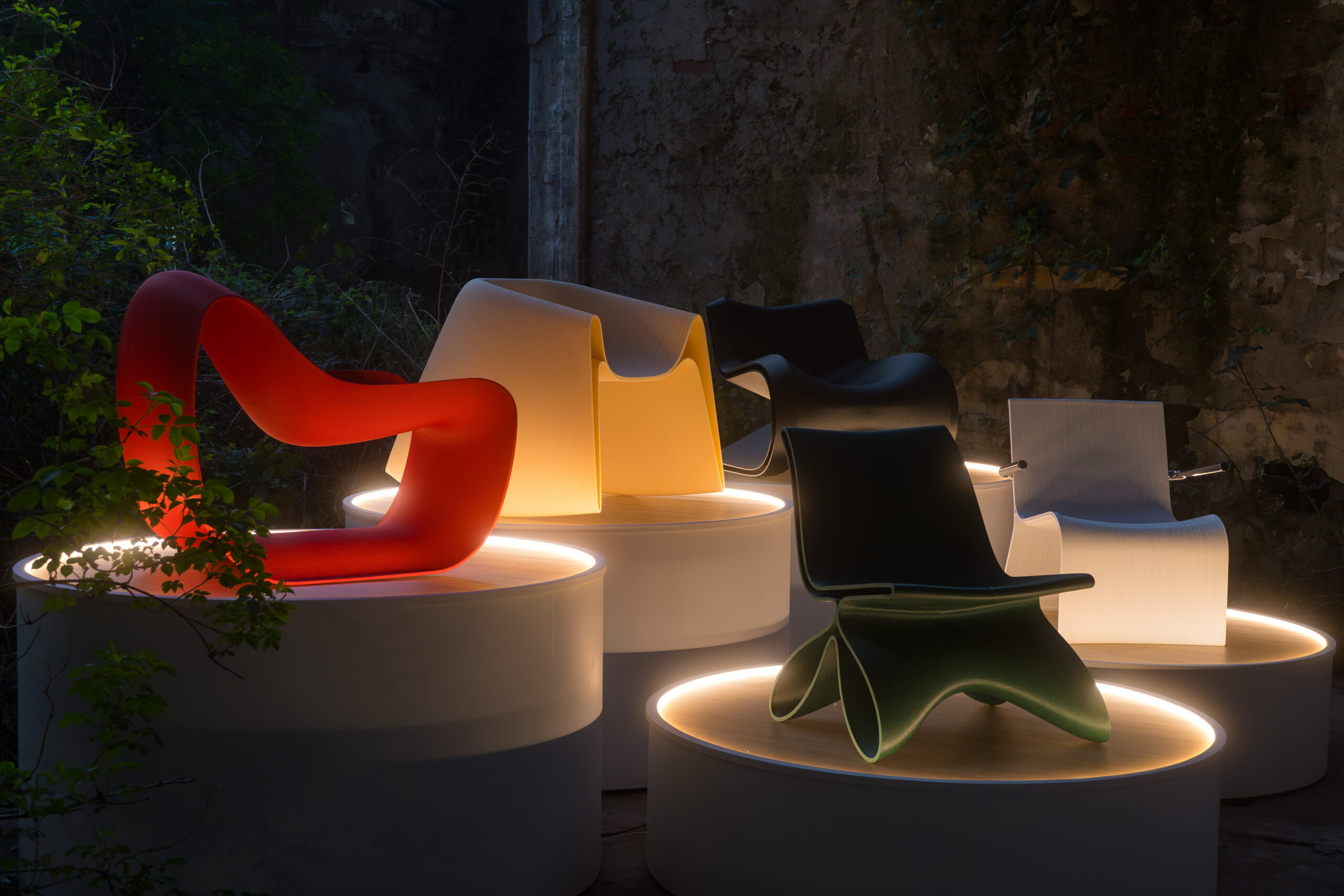
Chair collection at PORTAL Exhibit.
What Still Needs to Change
Even though things have improved, Hecht is clear that the space is still evolving. One of the biggest challenges is education.
“A lot of companies come to us with designs for completely different processes. They assume 3D printing can just do anything, but it can’t. Like any manufacturing method, it has its own constraints, and designing for it requires a different mindset.”
If Decibel’s approach works, 3D printing won’t replace traditional manufacturing. It will carve out its own category, one where speed, customization, and design flexibility matter more than mass production, and where the goal isn’t just to make something faster or cheaper, but to make something that wouldn’t exist otherwise.
Decibel has already begun teasing one of its latest collaborations, sharing a preview on Instagram of a Coachella installation tied to Justin Bieber’s brand Skylrk.
Images courtesy of Decibel Made