
IHI Europe has purchased a Freemelt electron-beam powder-bed fusion (E-PBF) system. Previously, parent IHI bought two Freemelt systems, bringing the total to three. IHI is a Japanese engineering conglomerate. The company is a major jet engine manufacturer, space component contractor, and industrial machinery builder. The company makes turbochargers for cars, small tractors, oil storage tanks, bridges, and tunnel boring machines. It also makes parts for the GE GEnx engine, Rolls-Royce Trent turbofan aircraft engines, and rocket engines. IHI employs over 28,000 people and has revenues of 1626.8 billion yen, around $10 billion.
IHI Europe’s Dr. Rachel Jennings, Head of Advanced Technology Development, stated,
“Freemelt’s open platform enables us to push the boundaries of what is possible in high-temperature materials. It gives us the flexibility to experiment with small batches of novel alloys cost-effectively and at speed—something rarely achievable with conventional additive systems. Freemelt’s philosophy has always been to co-develop with their customers. Their openness and responsiveness have allowed us to adapt the technology to our needs while benefiting from a strong user community. E-PBF enables the fabrication of novel high-temperature, high-performance materials that allow us to push the boundaries of applications.”
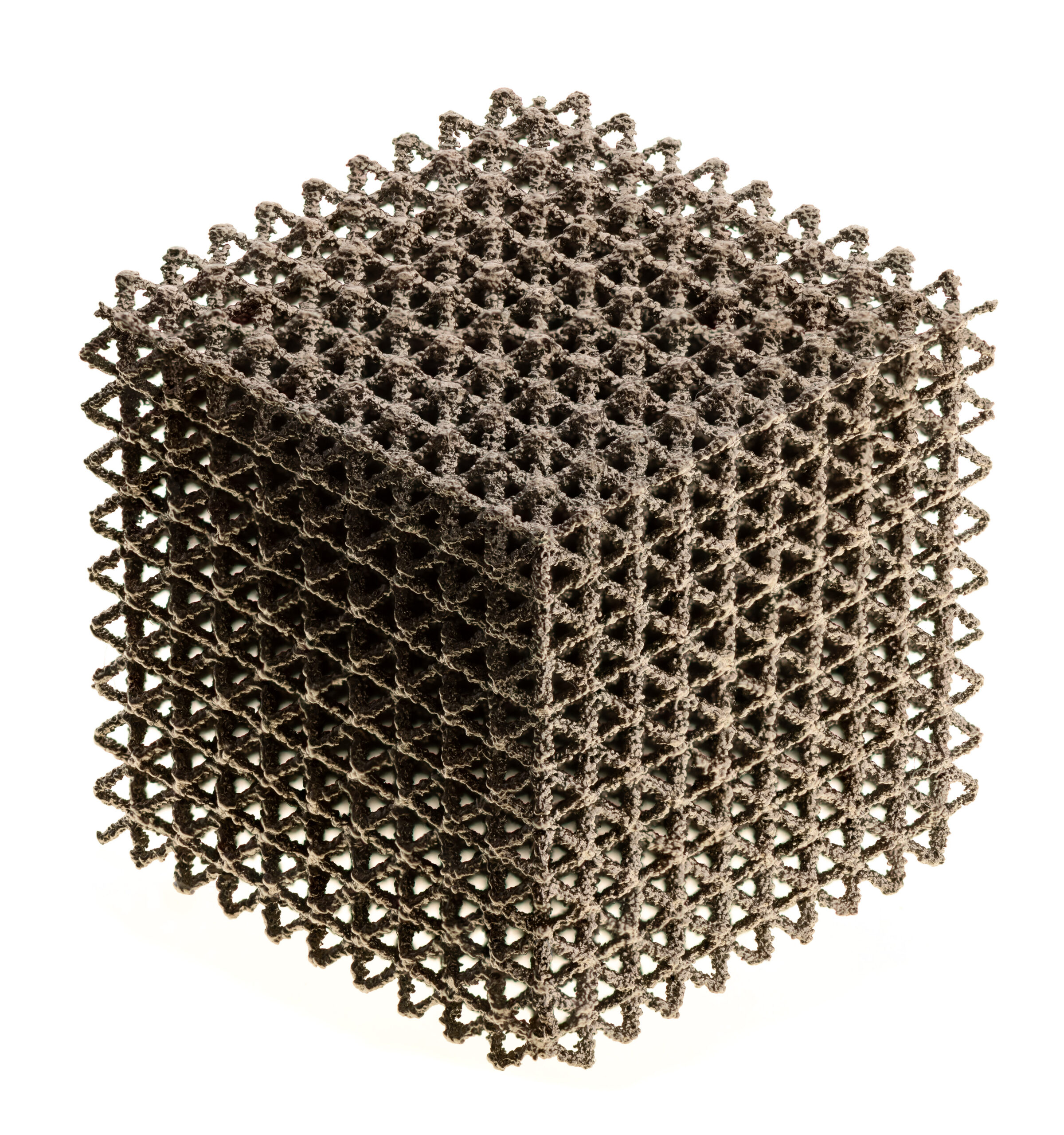
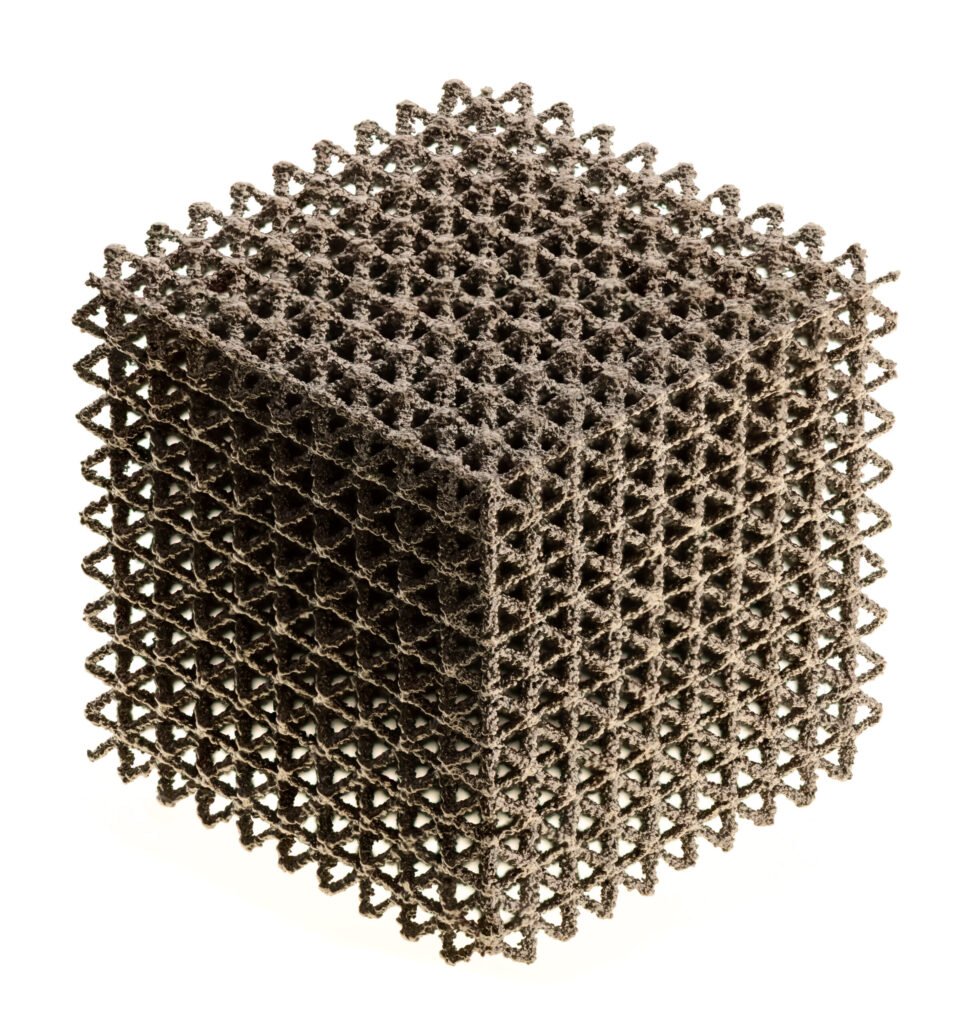
Cube lattice in Ti64. Image courtesy of Freemelt.
The company wants to research new Nickel superalloys. The company also wants to go deeper into gamma titanium aluminides, which are lightweight replacements for superalloys on turbo machinery. These low-density, high-creep-resistance materials work well up to 750 °C. These materials are brittle, which makes E-Beam, in particular, and additive manufacturing generally promising technologies. By fine-tuning parameters, grain structure, and build strategies, these materials can be made to work well with E-Beam and may cut the weight of your part by up to half compared to Inconel and the like. There’s a lot to be excited about here.
In particular, the firm is interested in IHI TiAl 823, an alloy designed from the ground up for turbo machinery, specifically for low-pressure turbine blades. The firm is probably looking to speed up production relative to casting or forging. Additionally, it could construct materials in wholly new ways. Different hatching strategies or the development of laser strategies to mix dissimilar materials could create wholly new alloys on the machine itself. That would indeed be a very exciting thing for IHI to do. More new alloys could give the company an edge in space exploration or aero engines. Specifically created alloys, such as TiAl 823, can be produced more cheaply and quickly using additive manufacturing. This could lead to very specific materials designed to win and outperform in very valuable niches that were previously too small to develop alloys for.
IHI will be working with Tohoku University and CEIT. “Work on powder modification and atomization techniques has shown promising results in improving conductivity and process stability, paving the way for broader applications across multiple AM processes.” I really like how IHI lauds Freemelt’s open philosophy. By being open and working with clients, the firm helps them master the technology. With Freemelt, the choices, options, and buttons to push can be daunting, but you are not a captive of predefined settings or parameters. Truly innovative applications can therefore be made. The advantages of speed and cost per build will also make a lot of sense, especially for companies using expensive new alloys.
This seems like a sensible investment for IHI. Electron beam technologies have long been a NASA darling, but are being underutilized given their capabilities. Especially in turbine blades, the process is perhaps the most advantageous and has been proven out now across many years. At the same time, in-house alloying can really push the needle for IHI. RCCAs and other new alloys can become alloy systems that can govern the future of space and aviation. If IHI could make a new Inconel or an Inconel for just certain turbine blade components, then the investment would be well worth their while. Many companies were characterizing Inconel or trying to get copper to work without seeing the bigger picture. By designing a well-working alloy for a specific application, companies can leapfrog the competition and own the future. A small improvement in density or ductility could mean many billions in lost or won engine contracts at the end of the day.