
Across the additive manufacturing industry, a shift is underway. One that is becoming increasingly visible in both strategic discussions and day-to-day hiring realities.
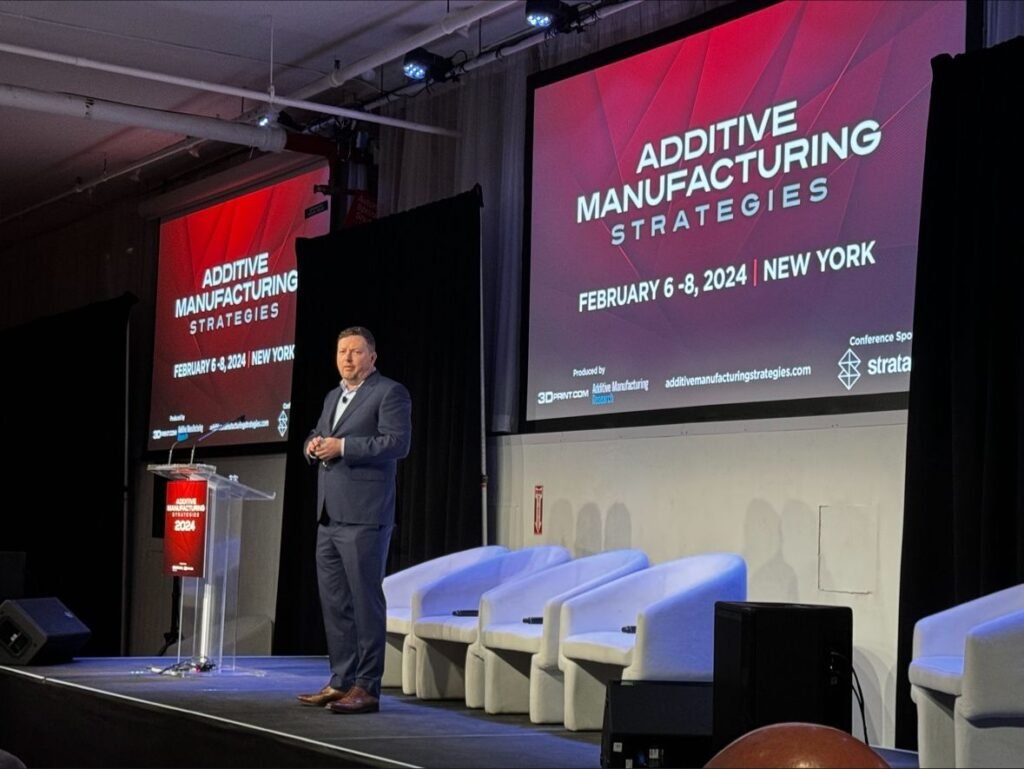
At this year’s Additive Manufacturing Strategies (AMS 2026) conference in New York, much of the conversation focused on how companies can transition from technology-driven growth to application-led, commercially viable business models. A similar theme emerged at AM Forum Berlin, where workforce data (from Alexander Daniels Global) highlighted a market moving into a new phase of maturity — defined by slower job creation, rising talent competition, and a shift in demand toward production and customer-facing roles. In parallel, ahead of TCT 3Sixty in the UK — with their newly added Workforce and AM Skills track — attention is turning toward workforce structure: how companies build, retain, and deploy talent in an industry that is no longer scaling through rapid hiring, but through more targeted, operationally focused growth.
These are not separate conversations. They are different perspectives on the same underlying change.
After more than a decade defined by rapid innovation and expansion, additive manufacturing is entering a more mature phase, one shaped by operational discipline, production scalability, and increasing competition around real-world applications. As a result, the workforce dynamics that once defined the industry are beginning to shift.
Recent data suggests that the challenge is no longer simply a shortage of skilled talent. Instead, the market is becoming more balanced — and in some areas, more competitive — as the growth of the workforce outpaces the creation of new roles. For companies, this is changing how hiring decisions are made. For professionals, it is reshaping how career moves are evaluated.
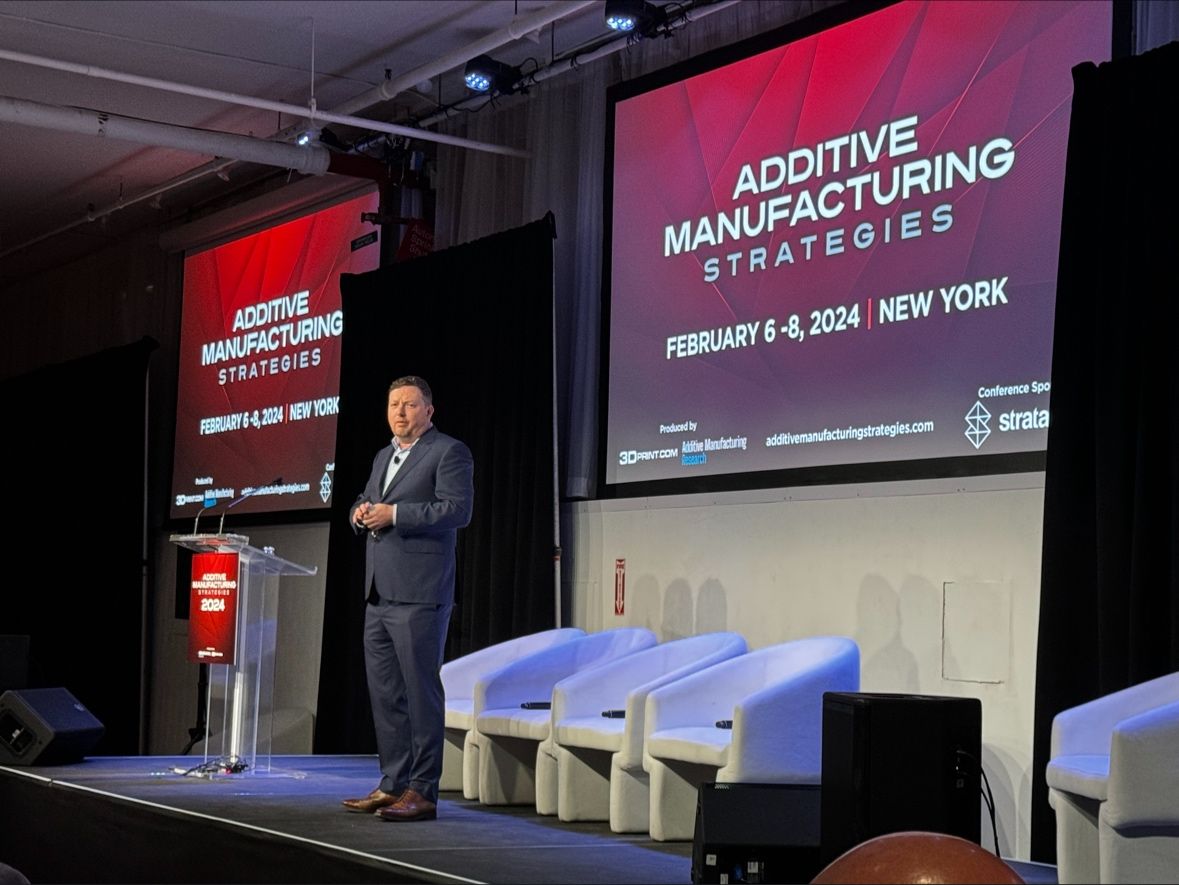
Joris Peels kicks off Additive Manufacturing Strategies (AMS) 2024. Image courtesy of 3DPrint.com.
The Talent Market Has Flipped
For much of the past decade, one of the most persistent narratives in additive manufacturing was the shortage of skilled talent. Companies struggled to find experienced engineers, applications specialists, and commercial leaders capable of translating complex technologies into real-world outcomes.
That constraint has not disappeared, but it has evolved.
Globally, the number of professionals working in additive manufacturing continues to grow, while the number of available roles is increasing more slowly. The result is a structural imbalance: there are now significantly more candidates in the market relative to open positions, with data indicating that there are over 150 professionals for every AM job globally.
This shift is being felt across regions. North America continues to expand its workforce, Europe has stabilized following a period of consolidation, and APAC is returning to growth. But in each case, hiring demand is no longer keeping pace with the size of the talent pool.
At the same time, workforce behavior is changing. Professionals are becoming more cautious about moving roles, with fewer describing themselves as “extremely likely” to change jobs and more prioritizing stability, job security, and long-term career development.
Taken together, these trends point to a market no longer defined by scarcity but by selectivity.
Hiring Is Becoming More Targeted
As the market matures, hiring strategies are shifting accordingly.
Rather than large-scale recruitment drives, most companies are now planning smaller, more focused hiring efforts. The majority expect to hire only a handful of professionals over the next 12 months, reflecting a move toward precision hiring — bringing in specific skills to address defined operational needs rather than expanding teams broadly.
This change is closely tied to wider business priorities. Many organizations have spent the past two years optimizing cost structures, integrating acquisitions, and refining their go-to-market strategies. As a result, hiring is now increasingly driven by:
- replacement rather than expansion
- capability gaps rather than headcount growth
- internal upskilling alongside external recruitment
In practical terms, this means companies are placing greater emphasis on the quality and relevance of hires, rather than the speed or scale of hiring.
The Shift Toward Production and Applications
One of the clearest signals of this new phase is the changing nature of demand across job functions.
Production has emerged as the most in-demand discipline, with a significant majority of companies planning to hire in this area.
This marks a notable shift from previous years, when hiring was more heavily concentrated in sales, R&D, or early-stage commercial roles. Today, the priority is execution.
As additive manufacturing moves further into serial production, companies require:
- machine operators and technicians
- process and manufacturing engineers
- quality and inspection specialists
These roles are essential for delivering consistent, repeatable output, something that is increasingly expected as AM competes with traditional manufacturing methods.
At the same time, the industry is seeing sustained growth in applications and customer-facing roles. A growing proportion of the workforce now sits in sales, applications, and consulting functions, reflecting the importance of helping customers adopt and scale AM effectively.
This combination — production capability and application expertise — highlights a broader transition. Additive manufacturing is no longer just about developing technology; it is about deploying it successfully in real-world environments.
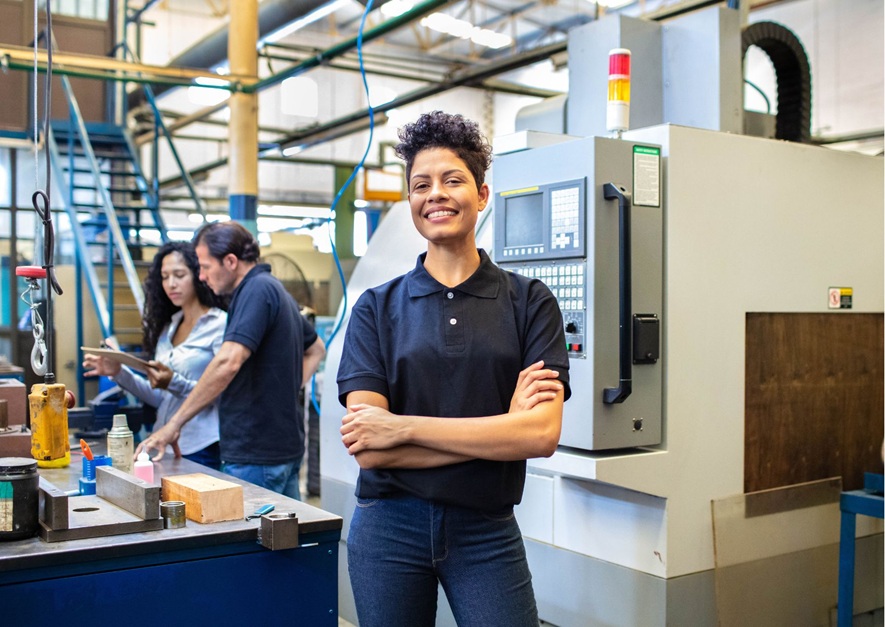
AM engineer. Image courtesy of Alexander Daniels Global.
From Platforms to Applications
This shift has also been reflected in the strategic conversations shaping the industry.
At Additive Manufacturing Strategies, Arno Held (Managing Partner, AM Ventures) captured this change succinctly:
“AM is not a platform game. It’s an application monopoly game. You have to own a niche application.”
The implication is significant. Competitive advantage in additive manufacturing is no longer defined primarily by machines, materials, or even software platforms. Instead, it is increasingly determined by the ability to:
- solve specific industrial problems
- deliver reliable and repeatable results
- build deep expertise within defined application areas
Workforce strategy sits at the center of this transition.
Owning an application requires more than technical capability. It requires teams that can combine engineering knowledge, production experience, and customer understanding, often within the same role or function.
A More Mature Industry, A More Complex Workforce
The emerging picture is one of an industry that is becoming more structured, more disciplined, and more competitive.
Growth has not disappeared, but it has become more measured. Hiring has not stopped, but it has become more selective. And talent has not become less important. If anything, it has become more critical, but in a different way.
The challenge is no longer simply finding people with additive manufacturing experience. It is about building teams that can:
- scale production reliably
- integrate technologies into existing workflows
- translate technical capability into commercial outcomes
In that sense, the evolution of the workforce mirrors the evolution of the industry itself.
Additive manufacturing is moving beyond its formative years. As it does, the demands placed on both companies and professionals are changing, shifting from experimentation and growth toward execution, specialization, and long-term sustainability.
Looking Ahead
As discussions continue at events like Rapid in April or TCT 3Sixty in June and beyond, workforce strategy is likely to remain central to how companies think about growth.
The next phase of additive manufacturing will not be defined solely by technological breakthroughs, but by the ability to industrialize those technologies – reliably, repeatably, and within clearly defined applications.
Understanding how the workforce is evolving will be key to navigating that transition.
These trends – and the data behind them – are explored in more detail in the 2026 Additive Manufacturing Salary Survey, which draws on insights from professionals and employers across North America, EMEA, and APAC.