
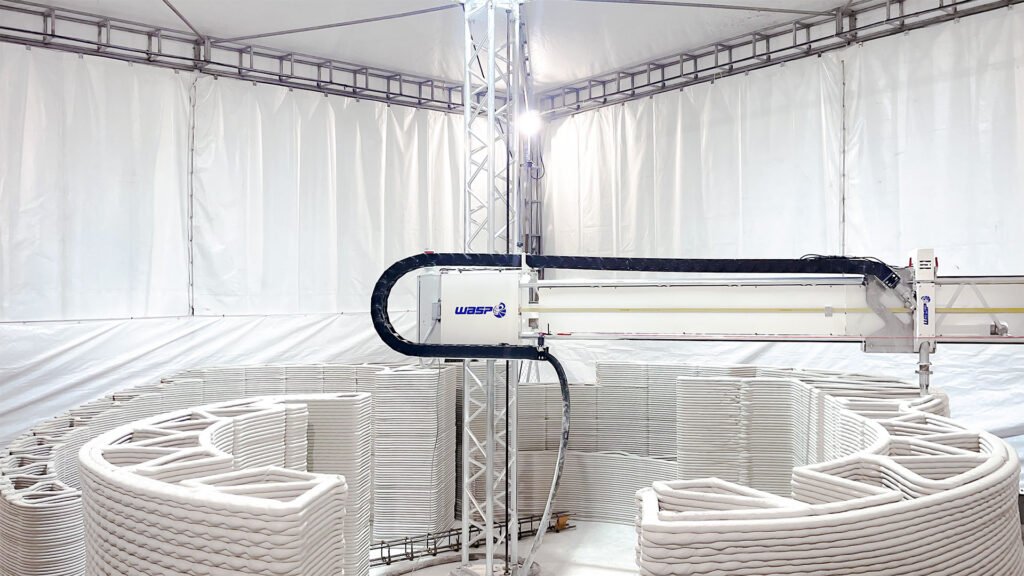
At Milan Bergamo Airport, WASP has helped 3D print a new airport services structure. The small building, named Ol Casél, serves as a rest and relaxation area for customs staff. With toilets and a seating area, it is designed to give them a place to chill. Developed for airport operator SACBO by construction firm EDILCO in collaboration with WASP, the building was completed in 19 days. Doors, windows, and the roof were added after printing. The 3D printed walls incorporated oclusions and areas to easily integrate wiring and other components.
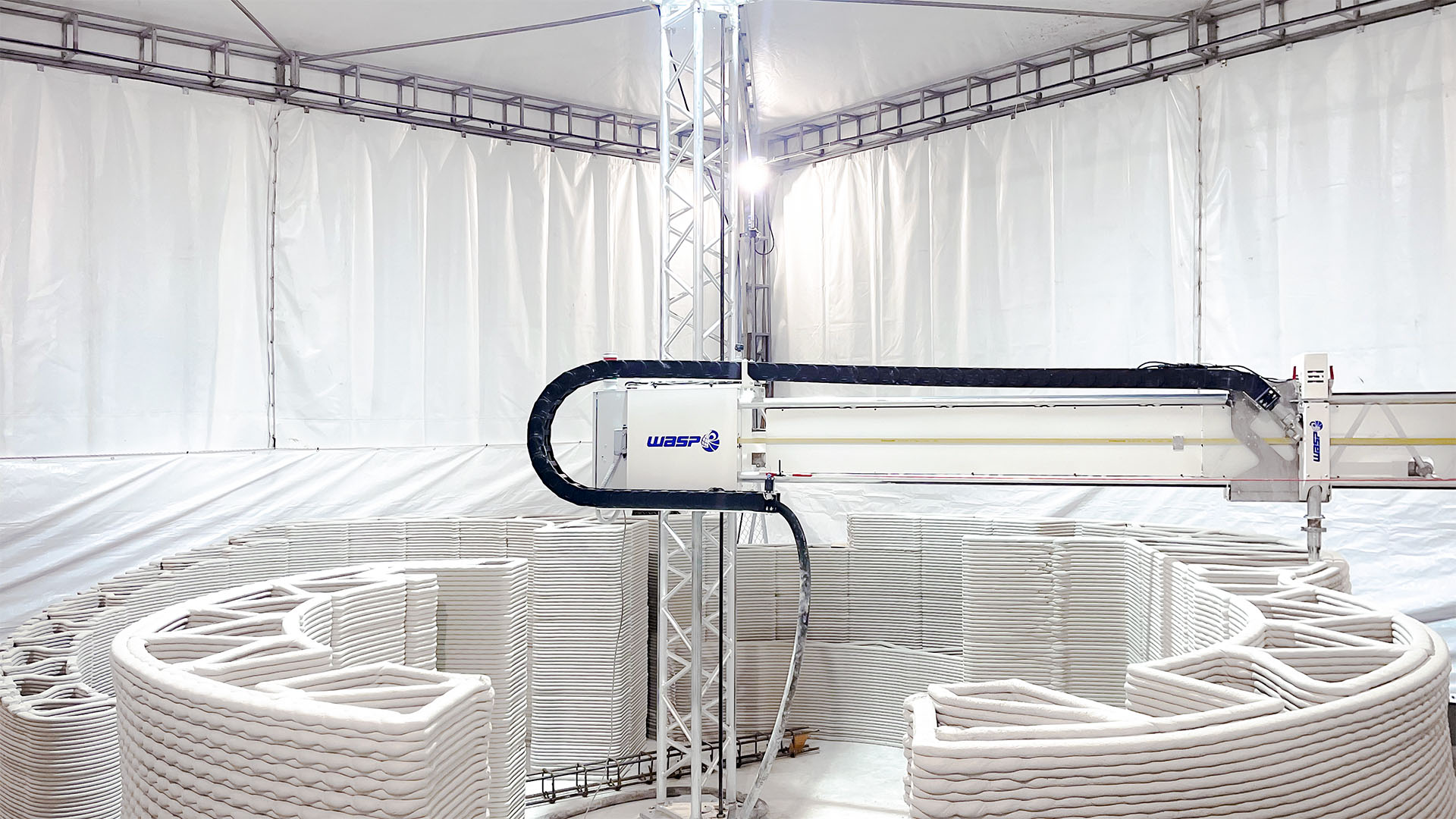
The Crane WASP at Bergamo Airport.
Seven days of the 19 were taken up by the 3D printing process. As previous WASP projects have, this one used the Crane WASP. The Crane has a build volume of 8,200 mm by 3,200 mm and could print up to 200 mm/s. Weighing in at over 700 kilos and over five meters in height, this massive machine comes with a pumping system and a twin screw extruder.
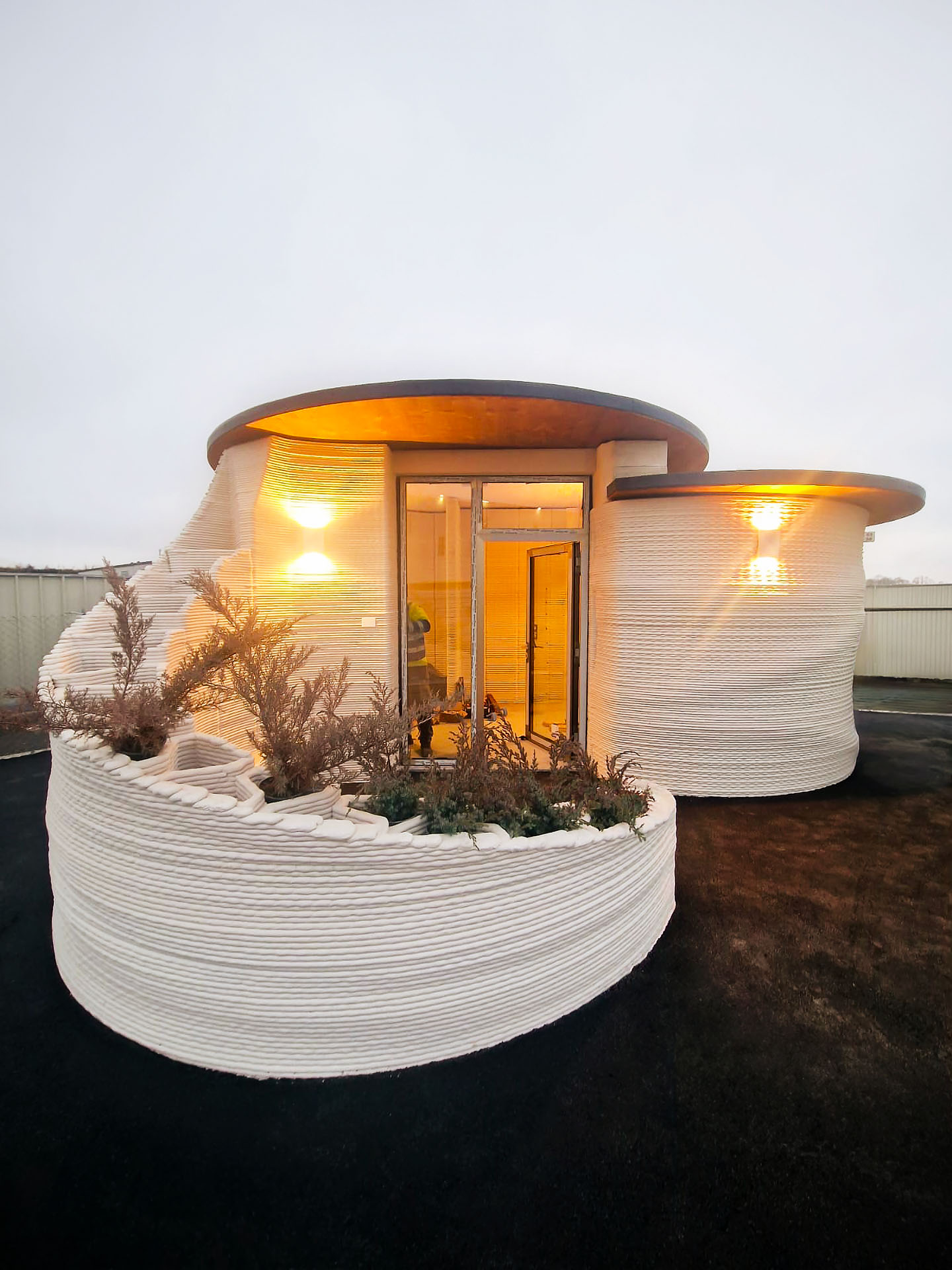
3D printed service building at Bergamo Airport.
Introduced in 2018, the WASP Crane has been used to print buildings in Japan using soil, an earth-based sustainable home in Italy, and a Dubai Dior concept store. WASP is unique because it really wants to save the world and use 3D printing to do so. On top of this strong, idealistic basis, the company makes machines that print many more materials than just concrete.
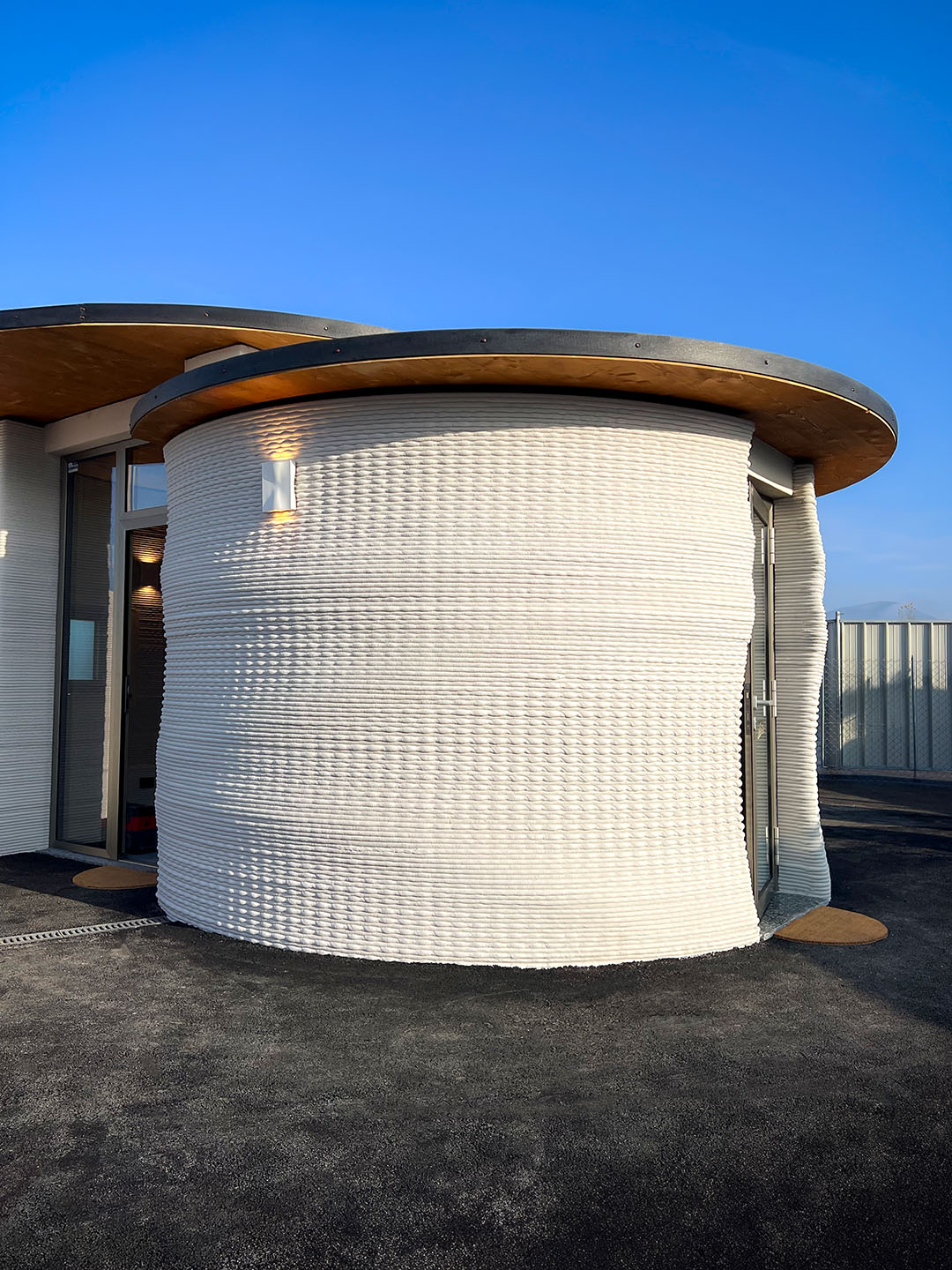
3D printed certified service building at Bergamo Airport.
The lime-based mortar was used in place of regular cement to save on emissions. Whereas a lot of the attention on 3D printing for construction is on houses, I’m more enthused by this kind of thing. In infrastructure, remote infrastructure, or difficult-to-access infrastructure, 3D printing makes a lot of sense. Whereas a quicker 3D printed house is nice and may be more affordable, not closing down a part of an airport for a few days adds additional savings. Not having to close down a runway, not having to use lots of security people to guard an area of the airport where people need to come and go, not having to make changes to roads/gates and access procedures for longer than necessary, not having to spend time monitoring cameras of a certain area under construction, the general risk of lots of new people milling around your site, extra searches and acess control all adds up. In such a place, a shorter construction time saves much more than just the construction cost of the structure itself. At airports and in some military or energy facilities, the exit, entry, and monitoring costs for temporary site visitors alone can eclipse the cost of the structure. The risk to the facility of anyone who should not gain access to this site also brings a financial cost that could eclipse any built-in costs of itself.
If we’re dealing with a large site like a nuclear plant, an integrated petrochemical facility, or an airport, any downtime of the main activity is also super costly. The difference between having cement trucks traversing your site three days instead of five could be considerable. And with every trip, the risk of an accident increases. If a runway had to be closed off for even an hour for some kind of construction activity, the costs could be enormous. Imagine also the unquantifiable stuff. Imagine managing Heathrow or something, and someone telling you that you need a crane at your site. I know nothing about managing airports, but I’d be rather allergic to that and would try to minimize time on site for this. In the case of large plants, processes can make thousands of tonnes of material an hour. So there is a per-minute cost if this is interrupted. But there could also be significant energy or other costs in ending and starting up processes. Speed could also end up saving on interruptions in uptime to ancillary processes, also. At remote sites such as Arctic bases, personnel are limited, so having someone feed, supervise, and help visiting construction crews is something that has to be minimized.
Yes, 3D printed houses are cool. But I love this project because it is an example of something potentially much more profitable and effective. 3D printed construction in denied, high-value, high-criticality, and secure environments is the one area that I’m the most excited about in 3D printed construction. Let’s hope that we see more examples of this in the wild.
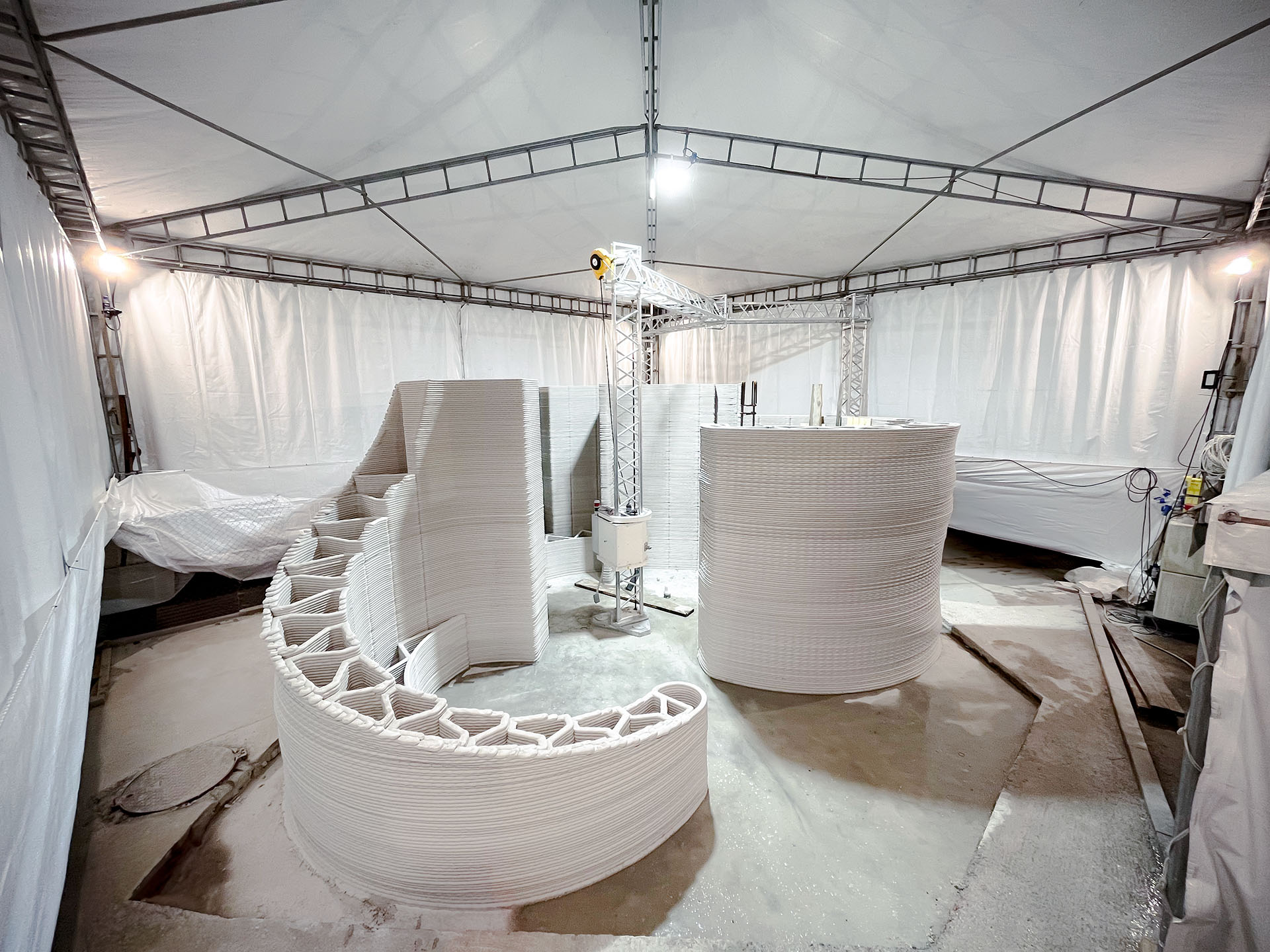
WASP’s Crane construction 3D printer at Bergamo Airport.
Images courtesy of WASP