
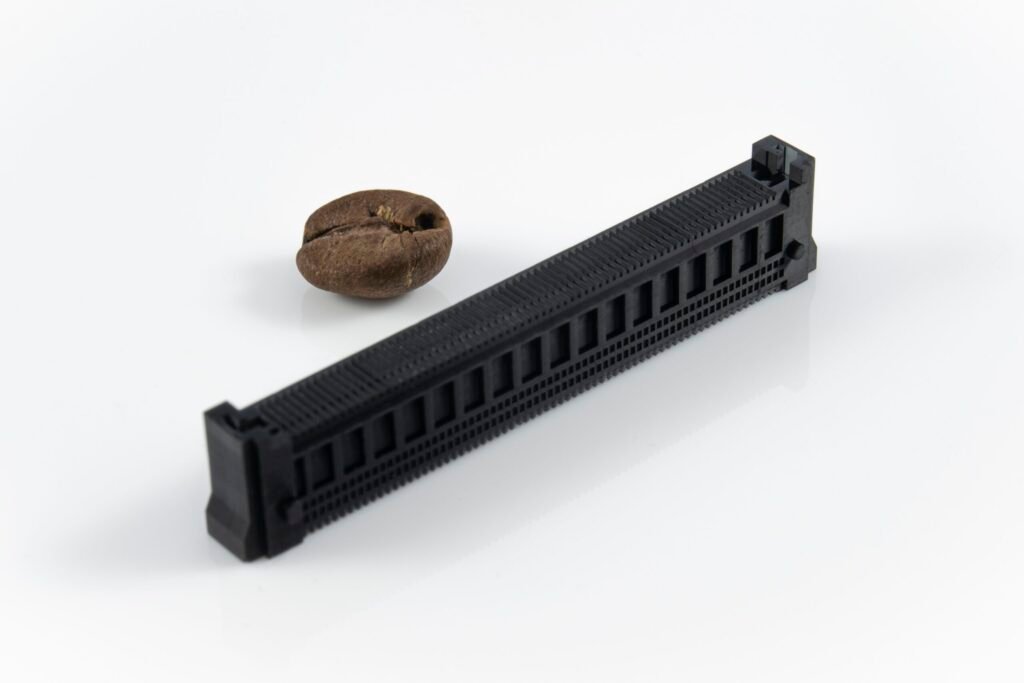
Boston Micro Fabrication (BMF) is releasing the microArch S150 Series. This series comprises two compact desktop systems. There’s a speedy microArch S150 Ultra and a more lab- or experiment-oriented microArch S150. The company thinks that the PµSL printers will be used for “microfluidics, fiber optics, biomedical devices, electronics, and advanced research.”
The Ultra is nine times faster than the regular S150, and could be used for “rapid prototyping, iterative design, and low-volume production of finely detailed parts such as microneedles, channels, nozzles, and chips.” The systems have 25 µm optical resolution, 10–100 µm layer heights, and a ±3 µm positional accuracy. Each layer takes between 4 and 12 seconds to print. There’s a HEPA13 filter, while a UV-C (253.7nm) sterilization system sanitized the build chamber after print runs. For some materials, the open printer has presets, and resin tanks can be heated to 60℃. The printer prints at 405nm, and the build volume is 80mm x 48mm x 50mm.
Both systems have been made to be easy to use and deploy. Automatic calibration, automated leveling, automated setup, touchscreens, and better material handling are some of the optimized features of these systems.
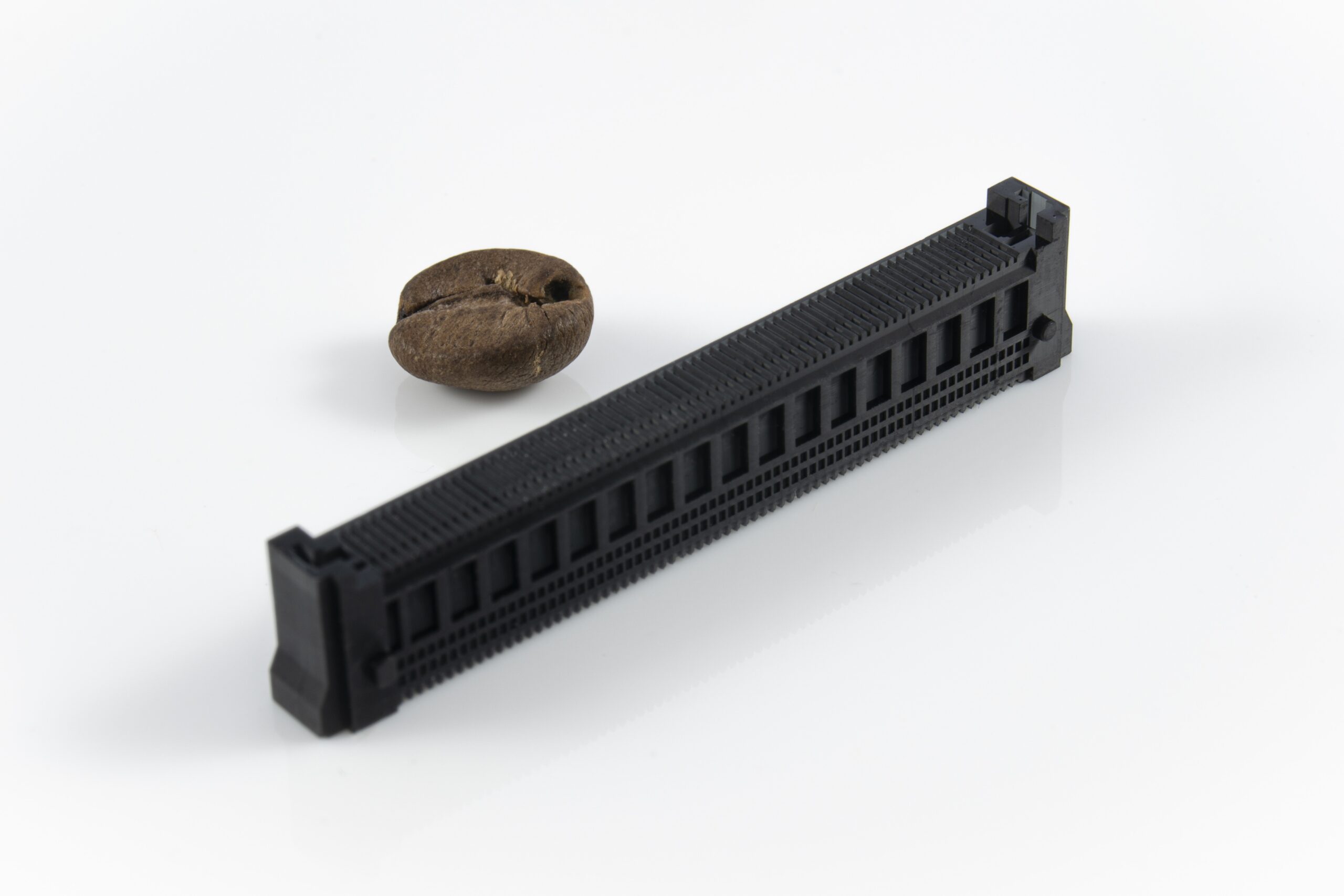
Housing with 130 Em features, 3D printed on S150 Ultra in 39 minutes.
BMF CEO John Kawola said,
“Our mission is to make micro-precision 3D printing a more accessible technology for innovators across multiple industries and the microArch® S150 Series is a true game-changer in enabling us to achieve that. Designed to directly support customers seeking to accelerate their research and development without sacrificing quality, these systems remove long-standing barriers and make true micro-precision 3D printing genuinely accessible. By introducing this series, we are empowering users to easily and successfully create high-resolution parts with the speed and efficiency required for today’s fast-paced development cycles.”
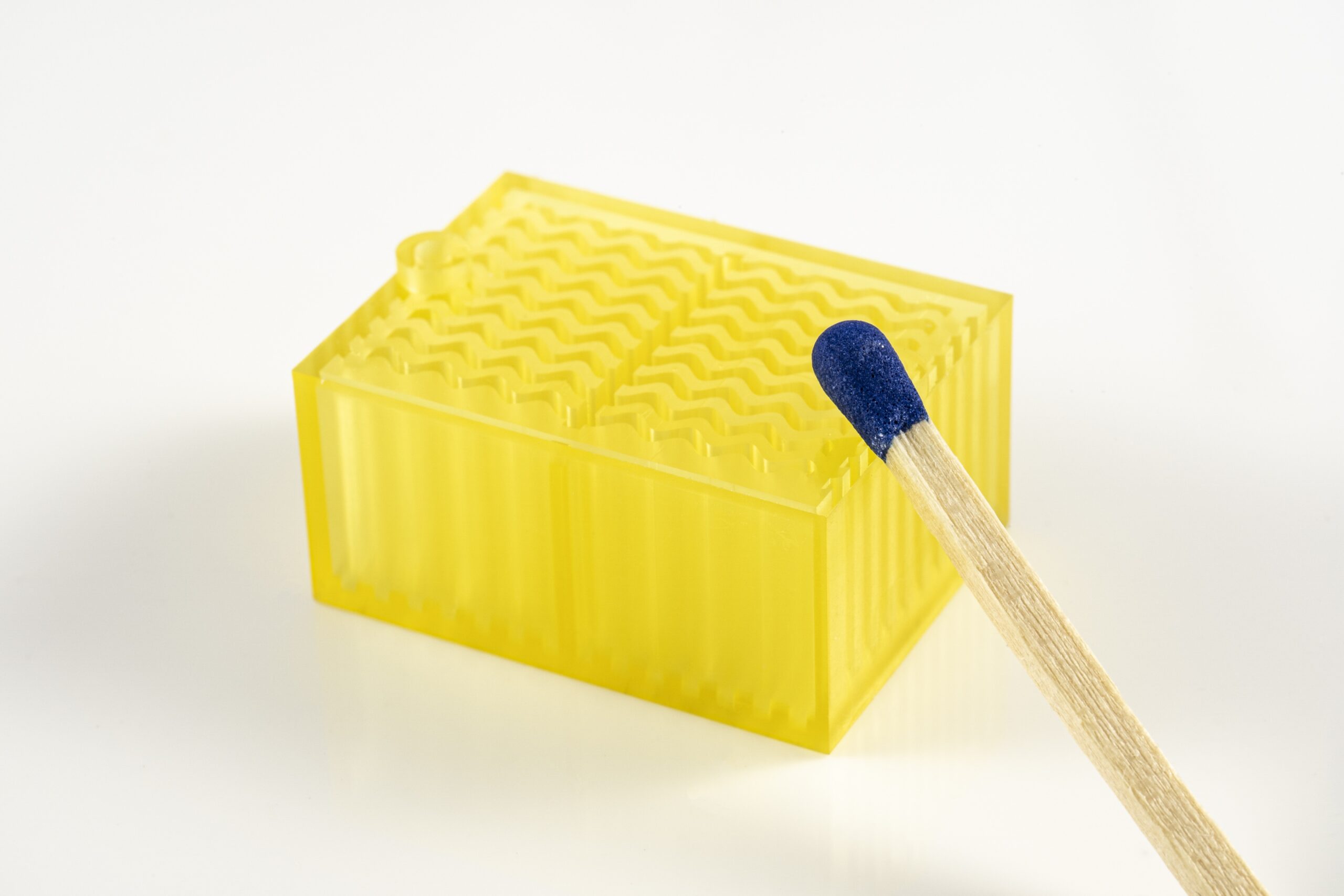
Heat Exchanger for Blood Cooling, 3D printed on the S150 in 1 hour, 18 min.
BMF will be at Rapid TCT showing off the systems, and they should be for sale at the beginning of Q2. BMF got a Series D round in 2023. The company has released more systems, such as a dual resolution system, and new resins, such as an SR (Sacrificial Resin) and a High Temperature material. Aside from these expected advances, the company is also moving ahead with deeper dives into applications. In both veneers and organ-on-a-chip, the company is pioneering its own solutions. Rather than just come up with a thin veneer material and offer it to customers, BMF is providing the whole solution and selling veneers.
The company, of course, has to balance these efforts. If its own applications are seen as competitive or a threat, it may scare off customers. But, if it strikes the right balance between offering open machines to anyone and developing its own products, it may have found a golden opportunity. The machines can be used for any and all research, anywhere. This could ensure it penetrates new markets and becomes the product used as new industries are invented. If it then has the pipeline of devices needed to industrialize this research process, it can benefit from people doing research and those rare examples that make it into production.
Meanwhile, in other areas, it can capture the full value of an application by developing, manufacturing, and selling it in-house. Traditionally, machine businesses, service businesses, and product companies are very different organizations. Companies trying to do several things at once often struggle to do anything right. A lack of focus or too much activity in poorly understood areas could also lead to disasters. Worse, these issues could arise from a lack of understanding of what needs to be understood. So it’s not the palm-sweaty, hip-swaying of a tightrope walker, but the blundering off a cliff, unseen, kind of mistake that becomes more likely to happen. Often, product people struggle to align with more process-oriented device people, and neither understands service folks. Culturally, therefore, the company will have to take care as well. But if it gets these things right, then the company could have two very different revenue streams. A shotgun-like device revenue stream dominated by growth in research funding around PµSL and its applications in one stream, while direct cash from applications in another. That could be a financially very attractive place for the firm to find itself.
Images courtesy of BMF