
“Bringing this integration capability for our advanced satellite payloads and HummingSat in-house iscentral to our strategy to reduce the time and cost of building our products. This agility brings value to our customers who need cutting edge products and innovation delivered at speed.”
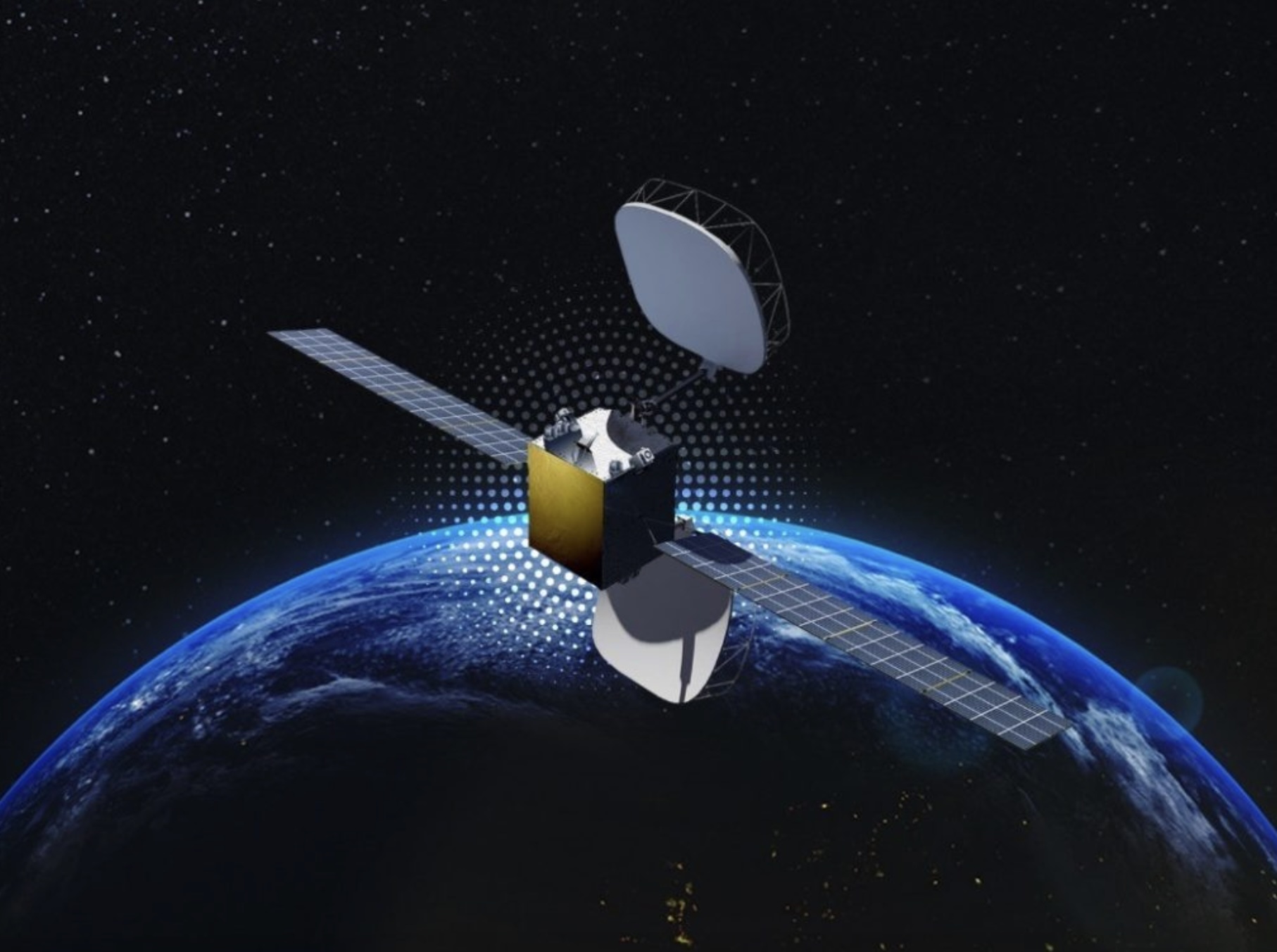
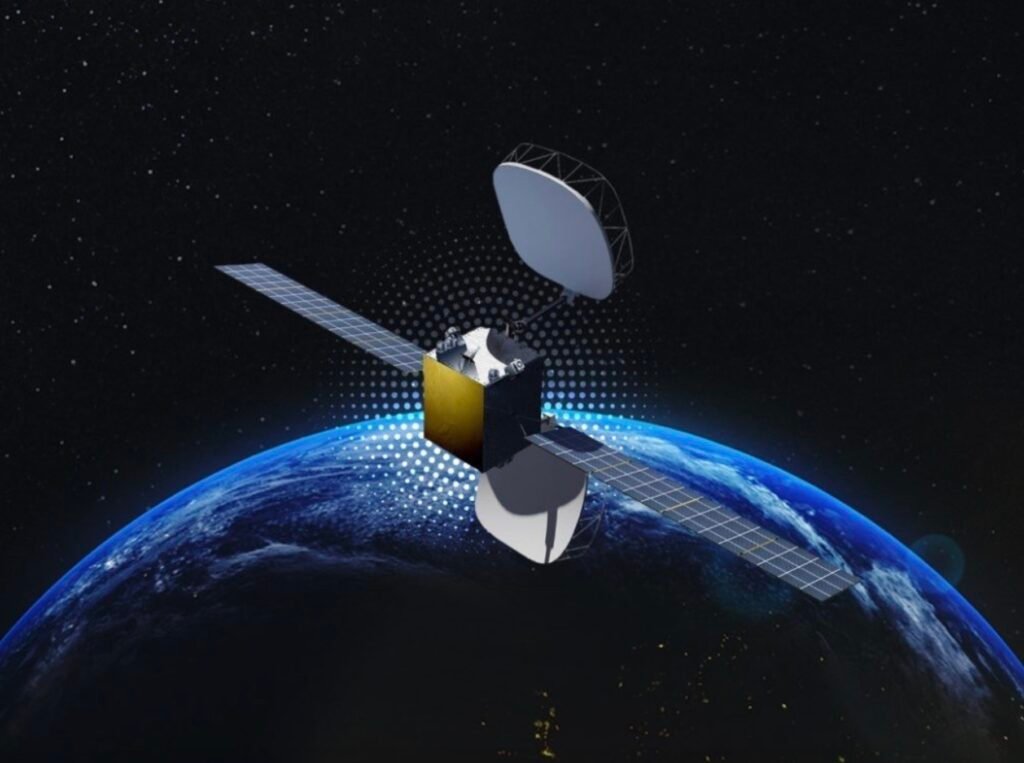
HummingSat is a geostationary telecommunications satellite. Image courtesy of SWISSto12.
Swissto12 also aims to build HummingSat in two to three years, much faster than bus-sized older platforms. For now, 4 satellites have been ordered. They’re expected to have a lifespan of 15 years and weigh a ton, with a 200 kg payload. The company aims to offer them at 10 times the price of the satellites it aims to replace. Intelsat 45 is the first, and it’s a Ku-band FSS/BSS replacement satellite. This is a Broadcasting Satellite Service, which transmits, for example, TV to many, and a Fixed-Satellite Service, which transmits to one particular area. The next three satellites are intended for Inmarsat/Viasat. These are Viasat/Inmarsat I-8 satellites. They are meant for its L-band (1 to 2 gigahertz) network, a secure emergency services network. After this, further communications satellites for general use or specific satellites for countries like Norway are in the offing.

SwissTo12 is ambitious, that’s for sure. The company is also working to grow its RF components business. The company makes 3D printed filters, antennas, waveguides, and more for the likes of Thales, Northrop Grumman, and Lockheed Martin. The company is also expanding into AESAs (Active Electronically Steered Antennas), AESA terminals, and even a dielectric material analyzer.
Through the use of additive, SwissTo12 is growing in satellite components and entire satellites. And we’re all stuck trying to sell parts to car companies. SwissTo12 is really showing how to dominate in individual application areas and leverage that into a fast-growing business. SwissTo12 doesn’t sell printers; instead, it designs, optimizes, and makes complete assemblies that use 3D printing to outperform. This allows the firm to capture a lot of the resulting value and lead in a fast-growing market. RF components and satellites are ideal for optimization, weight savings, component reduction, and better flow. If we can optimize all of these qualities at the same time, we can get an industry-leading device that combines excellent RF performance with superior economics. In the constrained space of satellites, a more optimized shape can enable them to do more or last longer. Weight savings reduce costs, while a supremely optimized component combines all the other advantages. More companies should follow in SwissTo12’s footsteps and apply additive to space.