
According to a report by Additive Manufacturing Research, the dental 3D printing market could reach $9.6 billion in revenue by the year 2033. It is one of the most mainstream applications of AM across the entire medical industry, with plenty of industry leaders, like Stratasys, putting a great deal of focus on the dental sector. In fact, Stratasys has such confidence in its TrueDent technology that the company offered complimentary 3D printed dentures to Team USA hockey star and Olympic gold medalist Jack Hughes, who lost multiple teeth at the recent 2026 Winter Olympics in Milan. I spoke to Chris Kabot, Vice President and Global Head of Dental for Stratasys, to learn more.
Kabot is a long-time industry veteran who previously worked at EnvisionTEC as the Dental Applications Manager. In a Stratasys press release, he said that 3D printing was built for “delivering real, customized solutions for real people, fast.” He also noted that “while we can all appreciate the grit of his now infamous grin,” Stratasys believes Hughes “deserves to celebrate with a great smile.”

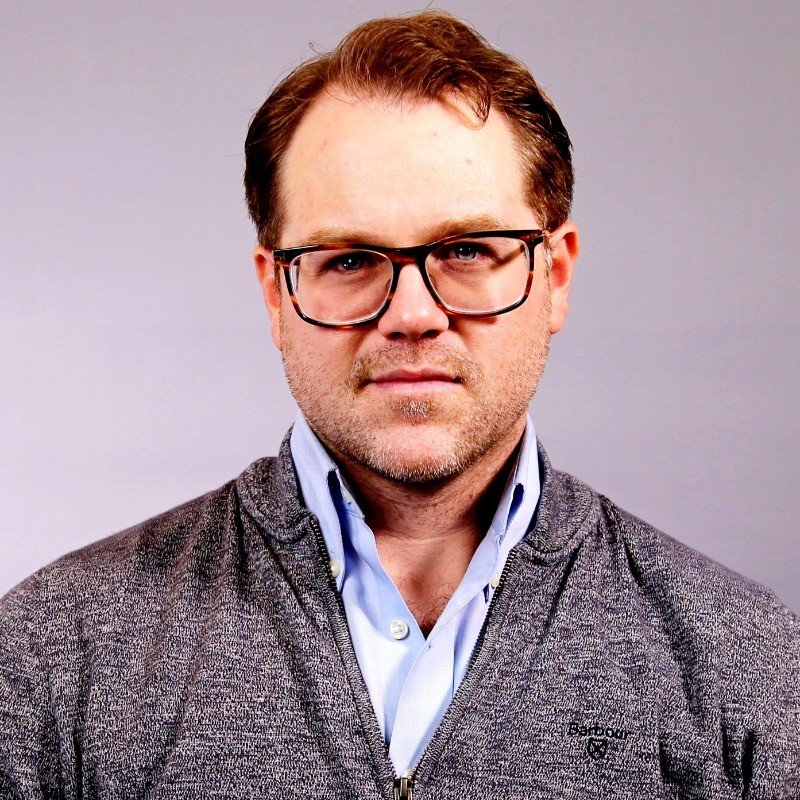
Chris Kabot, Vice President and Global Head of Dental for Stratasys
During the third period of the gold medal hockey game, Hughes, a forward for Team USA, took a high stick to the mouth from Team Canada’s Sam Bennett. The hit caused significant bleeding and knocked out a few of the athlete’s teeth. But Hughes chose to stay in the game and, in a moment that will likely be immortalized in a movie, later scored the winning goal in overtime. This was Team USA’s first Olympic gold medal in men’s hockey since 1980, so it was all very exciting.
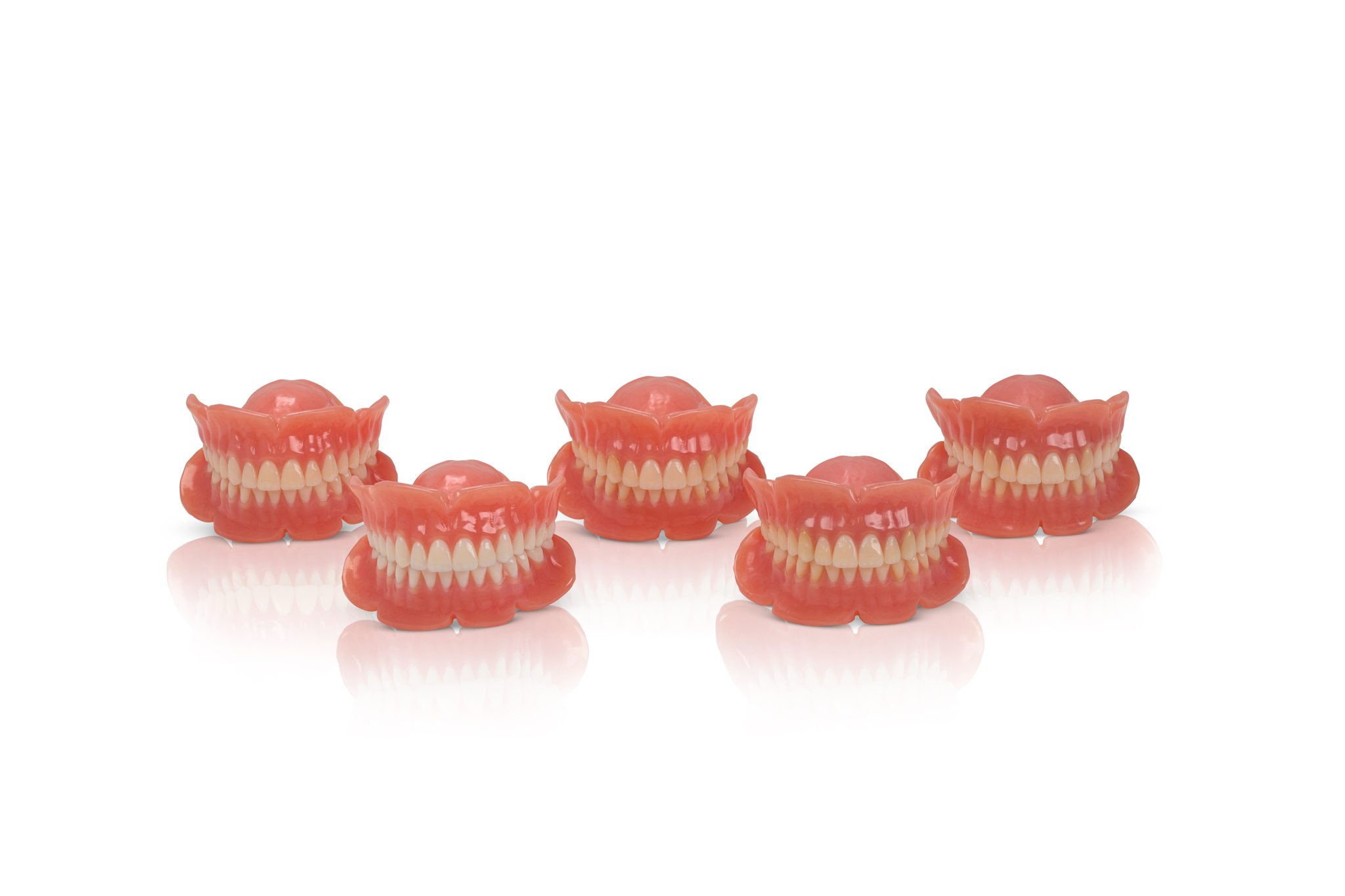
If you’ve watched a lot of hockey, you’ll know that tooth loss is not uncommon. Younger players often go with removable dentures rather than permanent implants, because they know the chances are high that they’ll lose more teeth over the course of their career. What’s changed is that we can now quickly 3D print full-color dentures for patients. And Stratasys TrueDent can do one better: printing monolithic, multicolor, lifelike dentures that match the look of a person’s existing teeth.
“Stratasys was the first to have a polychromatic 3D printed denture that solves all of the issues that we’ve had with the other digital solutions that have been out there,” Kabot said.
Kabot explained that when the dental industry first began transitioning to digital solutions, the aesthetics that could be achieved with analog workflows just weren’t there yet, which “held a lot of providers back from leveraging the digital applications that were out there.” He says Stratasys was the first to have a polychromatic, FDA-cleared material that can match existing teeth shades and blend right in with a patient’s smile.
“If you look at what happened to Jack specifically in the game when he had his front tooth knocked out, if you were going to use any other digital workflow to replace that tooth, it wouldn’t match because they’re monochromatic, right? You can’t print multiple colors in a DLP tooth,” he said. “We’re the only solution on the market that has the opportunity to do that.”
Kabot said that partial dentures are essentially a “band-aid” for hockey players during the season, but noted that when they’re made the “old-fashioned way,” a lot of labor is required. However, he also told me that “we’re in a full-blown labor crisis of people who could actually make this stuff” with traditional technologies.
“60% of Americans that are 60 years of age or older are candidates for tooth replacement,” he explained. “But we’ve experienced a 20% decline in dental technicians over the last 20 years. Prior to the pandemic, we had 50+ dental technology programs that you could go to and become a certified dental technician in the United States. Today we only have 15. So you put all that together and you’ve got a full blown labor crisis of actually of being able to leverage people that can make this stuff, which is why the digital applications are so sought after for these dental laboratories because they just can’t find people to make this stuff anymore.”
This crisis, paired with our on-demand culture, is why so many dental labs are turning to digital technologies, like intraoral scanners and, of course, 3D printers.
“A lot of the labs would love to opt for a digital solution, and we’re the only digital solution you could use to actually match that existing dentition that he [Hughes] has,” Kabot said. “It was a unique opportunity for us to reach out and show the benefits of the technology.”
It is important to mention here that Hughes did not actually take Stratasys up on its offer of a free set of 3D printed dentures. But to me, that’s not the most important part of this story. While it would have been really cool if he had accepted, the fact that the company has this much confidence in its technology that it’s comfortable offering it to someone on such a global stage is the bigger headline.
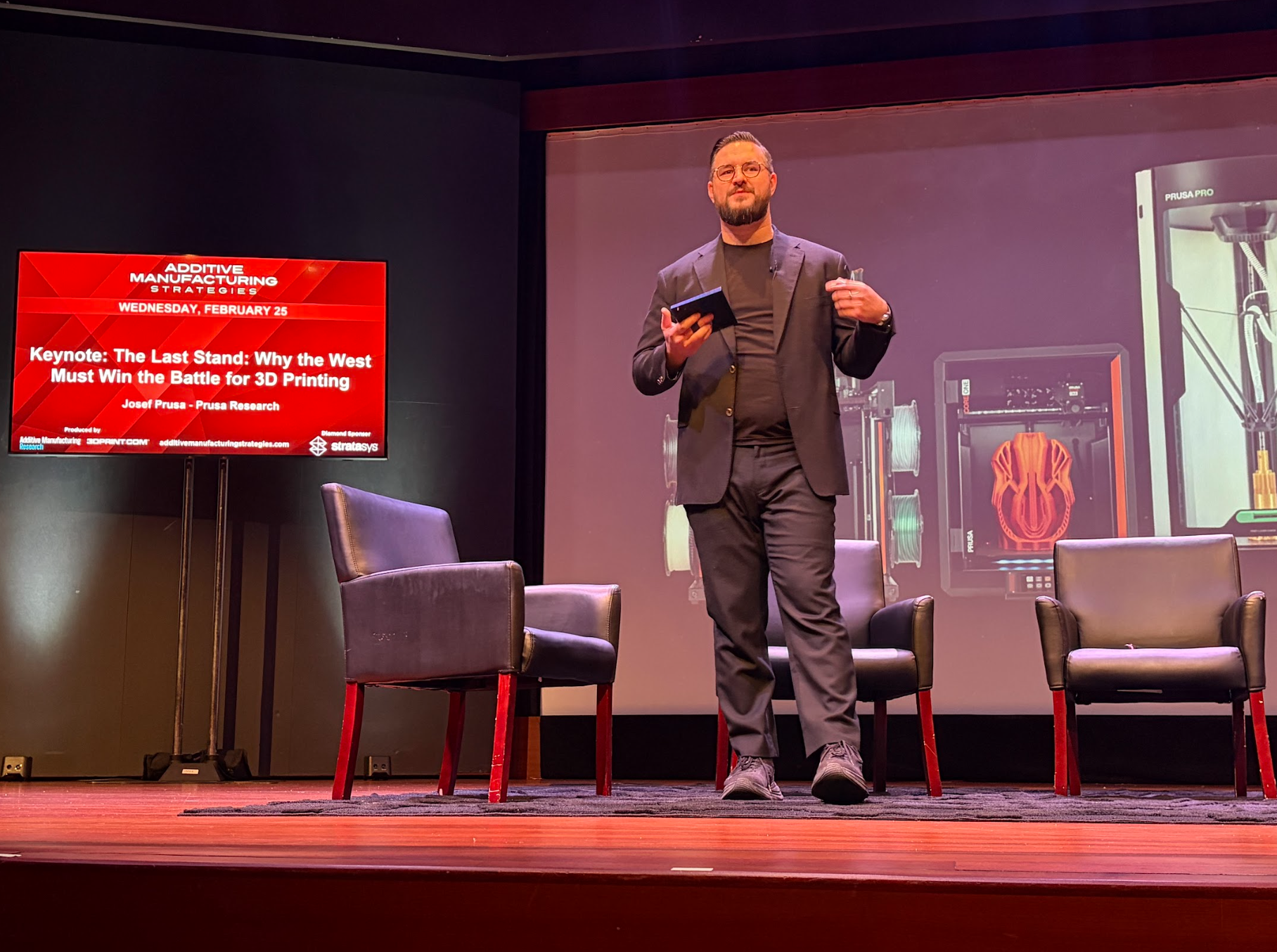
Josef Prusa, CEO and Founder of Prusa Research. Image courtesy of 3DPrint.com.
This makes me think about what Josef Prusa, CEO and Founder of Prusa Research, said during the recent Additive Manufacturing Strategies (AMS 2026) event in New York: we need to talk to more people outside of our industry and tell them about what the technology is truly capable of delivering. Prusa said the AM industry is “living in a huge bubble” and that we need to leave it more often to get the rest of the world excited about additive.
That’s exactly what Stratasys did in this situation. They saw an opportunity to highlight what their technology could do, and they took it.
“We were all inspired, I think, by the performance of the men’s and the women’s teams, and not just of what they did on the ice, but also their camaraderie,” Kabot said. “So yeah, I think it was opportunistic for us to reach out and highlight the benefits of the technology.”
So what can TrueDent do? First of all, it leverages Stratasys PolyJet printing, and it’s a multicolor, or polychromatic, approach.
“So you can imagine, a denture tooth isn’t just all white, right? There is incisal translucency, and it’s darker as you get more to the apical of the prosthetic,” Kabot explained.
“All of the other solutions, whether it’s DLP or SLA, those are all really monochromatic solutions where you can only print one color throughout the entire tooth. So that’s what gives us the advantage. It’s by far the most aesthetic way of manufacturing a denture today. It actually now finally allows us to compete with the aesthetics you can get in the analog world, but you still get the benefits of digital, which is being able to customize, being able to match a patient’s existing morphology.”
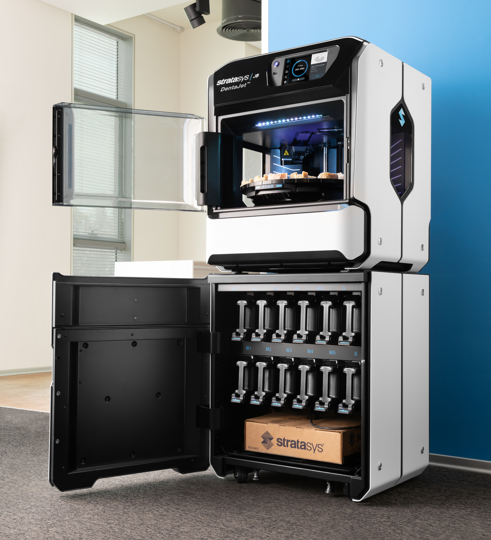
Stratasys J5 DentaJet
TrueDent is a tooth replacement therapy that uses the compact Stratasys J5 DentaJet platform. Kabot said the turnaround time for the company’s 3D printed dentures is less than a week.
“The best dental techs in the world can make one in about two hours,” he told me. “We can print 40 in 10 hours. We just have more throughput.”
The technology has already received FDA clearances and recently achieved Class IIa approval in Europe. Additionally, at LMT Lab Day in Chicago last month, Stratasys launched a new voxel-based solution to achieve “the highest end aesthetic.” So it seems like things are only going to keep improving for a dental solution that already sounds pretty close to perfect.
“We’re finally deviating from indirect prints and from models,” Kabot said. “TrueDent is one of the first that’s a direct print application that can compete with analog materials.”
Just like Stratasys, we all need to be shouting from the rooftops exactly what 3D printing can do.
Images courtesy of Stratasys unless otherwise noted.