

Additive manufacturing is entering the most consequential period in its evolution. After years of experimentation and uneven adoption, the industry is showing renewed momentum, shaped by supply-chain pressures, and a digital foundation that continues to mature. While progress has not been linear, innovation across technologies, materials, and workflows is reactivating interest in how additive manufacturing can be applied at industrial scale.
This transition reflects a broader realignment in how manufacturers design, produce, and scale parts. As expectations rise, technology providers are being challenged to demonstrate that additive manufacturing can deliver reliable, repeatable, and economically viable outcomes within real production environments – not just in isolated use cases.
HP Additive Manufacturing Solutions (HP AM) has been working against a clear roadmap to address the barriers that have historically limited adoption, from cost efficiency and scalability to materials performance and integration with existing manufacturing systems. Our focus within this journey remains on staying disruptive where it matters and translating innovation into practical, repeatable manufacturing outcomes.

Economics will decide the next phase
The industry has learned this lesson the hard way. Adoption follows economics. As long as additive manufacturing sat outside the cost structures of traditional production, its impact was limited. As cost per part comes down and total cost of ownership improves, behaviour changes.
However, economics in additive manufacturing cannot be assessed on cost-per-copy alone. Even where unit costs approach parity with traditional methods, additive manufacturing delivers a broader set of economic advantages that reshape how manufacturers evaluate return on investment. The ability to iterate designs rapidly without committing to expensive moulding, for example, dramatically reduces development risk and shortens the path from concept to production. In parallel, additive manufacturing also enables production to scale quickly without disrupting existing supply chains – an increasingly important advantage amidst global trade volatility.
Local, on-demand production further strengthens the economic case. By placing production closer to demand, manufacturers can reduce lead times and accelerate time-to-market. Together, these factors extend the value of additive manufacturing well beyond the economics of any single part, fundamentally changing how manufacturers think about cost, flexibility, and resilience.
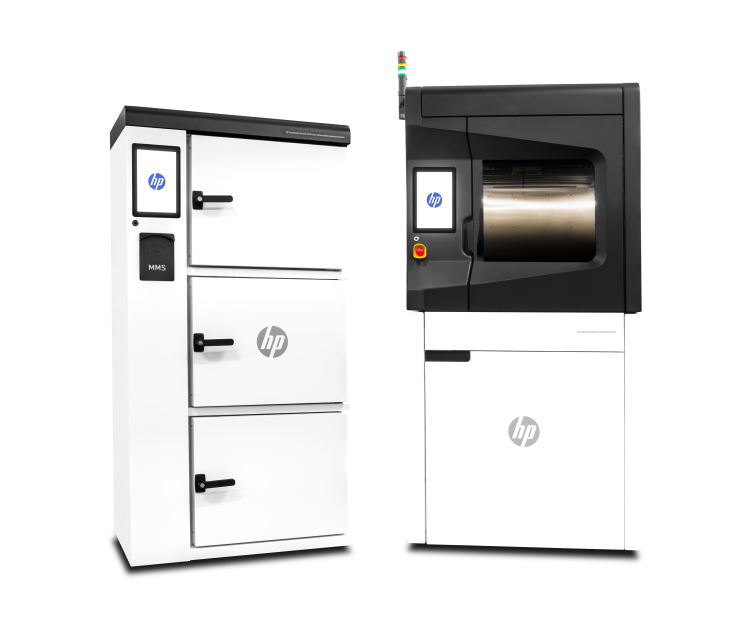
HP AM has focused its efforts on closing that economic gap. A commitment to reducing cost per part by up to 20 percent by 2026 is being driven by three levers: productivity improvements across HP Multi Jet Fusion workflows, materials innovation that improves powder efficiency, and optimized print processes that maximize throughput while minimizing waste.
The results are already tangible. Applications that once stalled at prototyping are moving into production. In some cases, manufacturers are shifting parts from injection molding to additive manufacturing at a pace the industry has never seen before.
Orthotics and prosthetics illustrate this shift clearly. Providers such as Invent Medical are operating at industrial scale, producing more than 100,000 patient-specific, 3D-printed parts and supplying over 1,000 hospitals and O&P facilities worldwide. This progress has been reinforced by policy change. HP AM’s participation in the consortium that helped secure U.S. government recognition of additive manufacturing as a reimbursable fabrication method last year removed a critical barrier to adoption, enabling 3D printing to move towards mainstream healthcare delivery.

The same economic logic is now extending into broader industrial production. By focusing on total cost of ownership at the system level – through an open platform approach to process development that gives customers control over variables such as layer thickness, build strategies, and material mix ratios, for example – HP AM is enabling faster production and continuous optimization at scale. These conditions are setting the stage for the next phase of adoption, where additive manufacturing scales fastest in applications that fully leverage its production advantages.
Production applications are scaling where additive delivers advantage
As economics improve, adoption is scaling fastest in applications where additive manufacturing delivers advantages that traditional methods struggle to match. Increasingly, new products are being designed with additive manufacturing from the outset, drawn by the design freedom it enables and the performance gains achievable through complex and lightweight structures. Together with the supply-chain benefits of localized, digital production, these factors are reshaping how products are conceived and manufactured in more flexible, responsive production models.
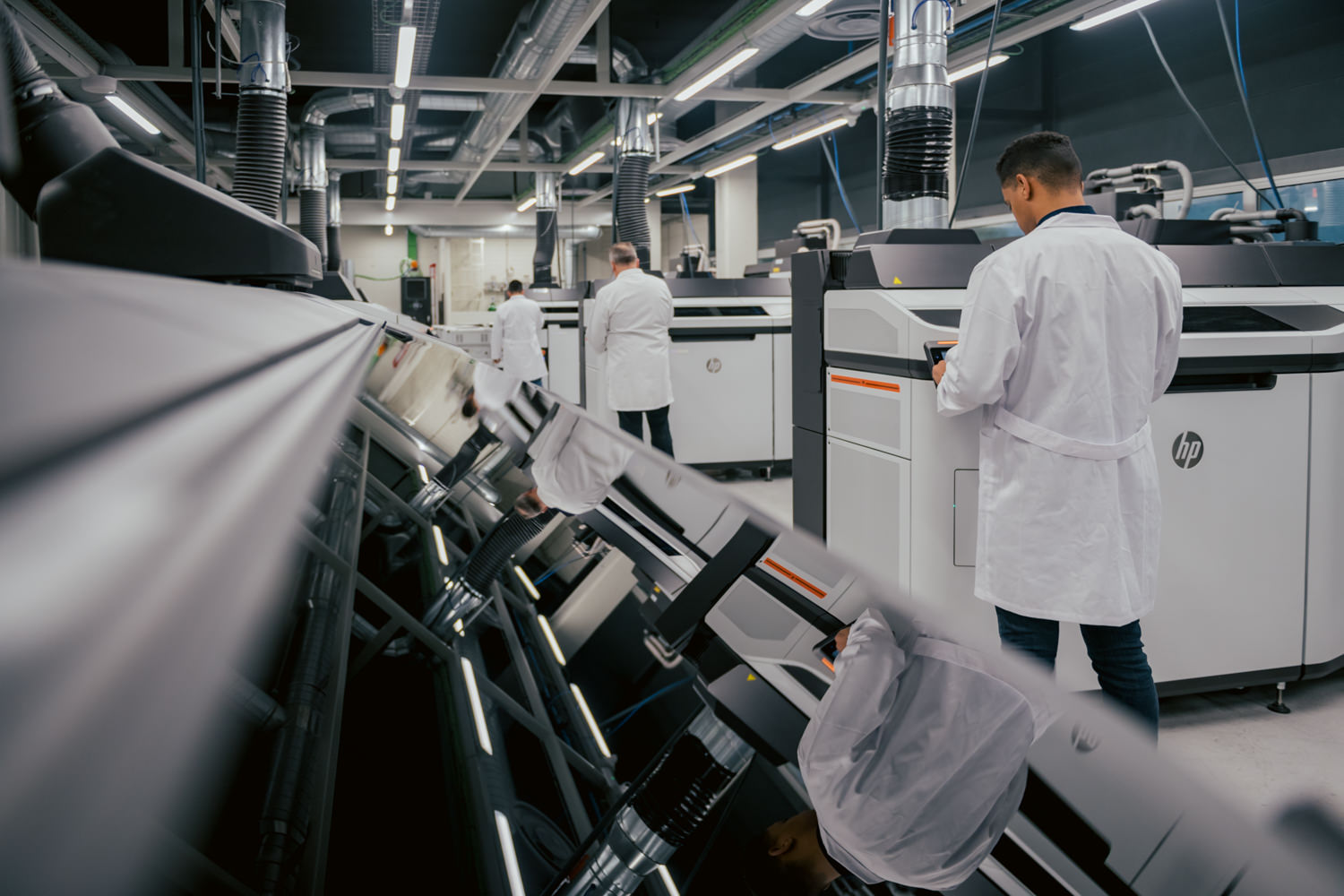
Orthotics and prosthetics is one of the clearest examples. With HP Multi Jet Fusion technology. clinics and manufacturers can produce patient-specific devices with repeatable mechanical performance, high comfort, and streamlined digital workflows. The Limb Kind Foundation illustrates this in practice by producing durable, lightweight prosthetic components for children around the world, expanding access regardless of geography or income. What stands out in the Limb Kind Foundation’s work is not just performance, but reach. It is a powerful reminder that digital manufacturing can transform lives as well as industries.
The same production principles have been applied within the U.S. Department of Veterans Affairs, where HP supported the VA’s first fully in-house, 3D-printed definitive prosthetic socket. Developed, produced, and refined entirely within the VA’s clinical infrastructure, the project shows how additive manufacturing can be integrated into day-to-day practice – enabling faster iteration and closer alignment with patient needs.
This pattern is also emerging in mission-critical and sustainability-driven applications. In South Africa, a collaboration between HP AM and The Eye Above is using HP Multi Jet Fusion technology to produce drones that are 96 percent 3D printed, supporting wildlife protection and anti-poaching efforts.
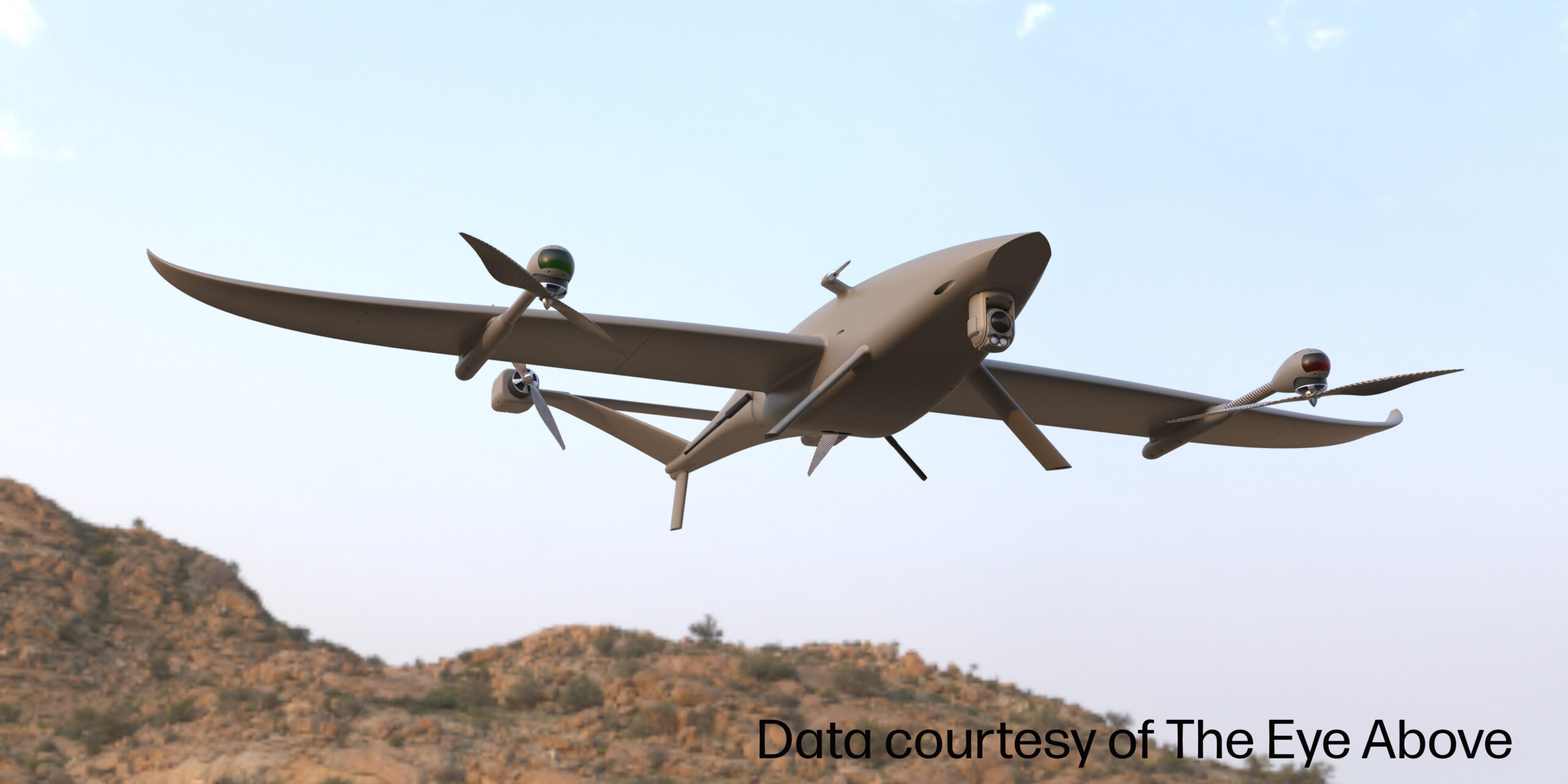
Here, additive manufacturing is an enabler of new design possibilities. Multi Jet Fusion makes it possible to produce extremely thin, single-wall structures that significantly reduce weight while maintaining mechanical strength – an essential factor for flight time, payload capacity, and operational reliability. In this context, lightweight design, rapid iteration, and localized production are operational necessities. The ability to combine all three within a scalable manufacturing model is what is allowing additive manufacturing to play a growing role in the drone sector.
Across industrial goods, customers in machinery, humanoids, robotics, and consumer products are adopting additive manufacturing for end-use parts, simplified assemblies, and flexible alternatives to traditional tooling. As MJF technology continue to improve, these high-value production applications are expanding quickly and successfully.
Portfolio breadth, materials, and ecosystems will matter
The next phase of additive manufacturing will favour providers that can support a wide range of applications with cohesive, industrial-grade solutions. At Formnext 2025, HP AM expanded its portfolio with the introduction of HP Industrial Filament 3D Printing Solutions to support new, engineering-grade, high temperature, applications. Combined with Multi Jet Fusion and Metal Jet, this gives customers more freedom to choose the right process and material for every application without compromising industrial requirements for repeatable, scalable production.
Sustainability is now integral to that scale. Materials innovation is where performance and environmental impact now intersect. Over the past three years, HP AM has reduced the carbon footprint per part by more than 70 percent through advances such as HP 3D HR PA 11 Gen2, which supports up to 80 percent powder reusability. Just as importantly, tools like the HP PrintOS Carbon Calculator embed sustainability into everyday production decisions, giving manufacturers the data they need to balance speed, cost, and environmental responsibility.
Underpinning all of this is digital infrastructure. Through the HP Additive Manufacturing Network and collaborations with partners such as Würth Additive Group, HP is enabling digital inventory, secure data exchange, and localized production models – capabilities that reduce cost and improve supply chain responsiveness.
What happens next
The next phase of additive manufacturing will separate industrial platforms from experimental ones. Cost per part will continue to fall. Production volumes will increase. Sustainability will move from aspiration to measurement.
HP AM’s roadmap reflects a long-term view of how additive manufacturing becomes part of global production. The future of the industry will not be defined by novelty. It will be defined by performance, economics, and impact – and by who can deliver all three at the same time.
Alex Monino is the Senior Vice President and General Manager of HP Additive Manufacturing Solutions. He has more than 15 years of experience in different positions at HP, which have taken him through different business units and given him extensive experience in the industry and a deep understanding of 3D market. is a key player when it comes to advancing strategic priorities as to unlock new opportunities and accelerate the mass adoption of Advanced Manufacturing
In his role as SVP & GM, Personalization and 3D Printing at HP, Alex leads HP’s disruptive technology and commercialization strategy to transform industries through new products, services, and business models with an explicit focus on applying HP’s advanced 3D Printing technologies in new ways to drive solutions across large markets.
Alex holds an Engineering degree on Industrial Organization by Universitat Politècnica de Catalunya, as well as formal training in Marketing Strategy and Management from INSEAD, Harvard and Kellogg School of Mgmt.
HP is a Sapphire Sponsor for Additive Manufacturing Strategies (AMS), a three-day industry event taking place February 24–26 in New York City. Alex will present a keynote, “Reliable, Repeatable, Scalable: The Future of Industrial Additive Manufacturing,” on February 25th, as part of the event, which brings together industry leaders, policymakers, and innovators from across the global AM ecosystem. Learn more and register here.