
We’re kicking off today’s 3D Printing News Briefs with some business news, as Meltio has announced a sales partner in the U.S. and Immensa has joined Shell’s Energy Transition Campus. Moving on, researchers from Tsinghua University developed a system that can print tiny objects almost instantaneously. Finally, Aectual designed 3D printed ceilings and storefront elements for lululemon.
Meltio Sales Partner AEC Helping Improve Growth in U.S. Metal AM Market
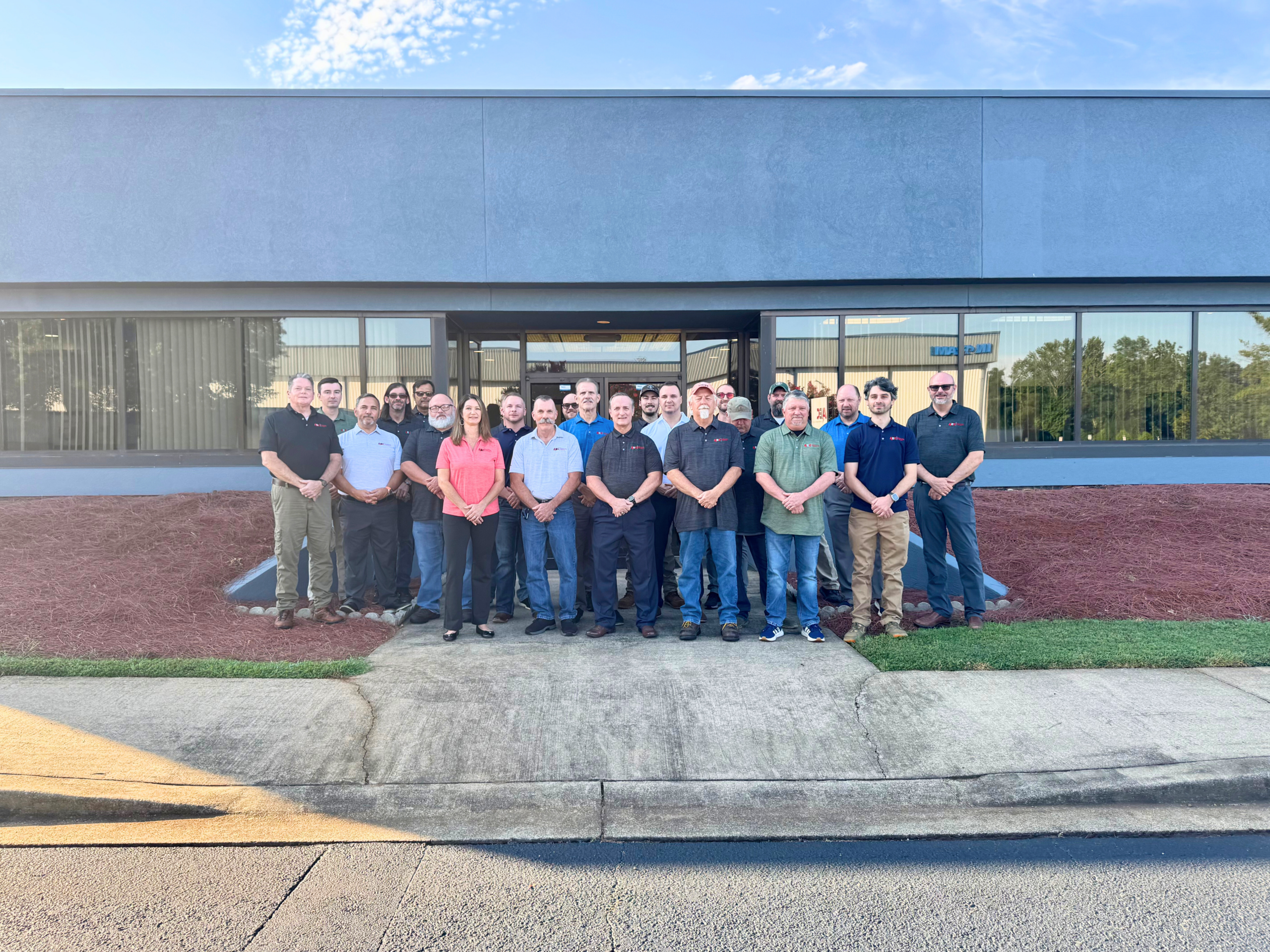
Spanish multinational Meltio announced that Automation Engineering Company (AEC) is its latest official sales and integration partner in the United States. Based in South Carolina, AEC is a trusted machine builder and automation integrator, and will help Meltio expand growth of its industrial wire laser metal deposition technology in the U.S. metal AM market. This partnership is an important strategic step in Meltio’s continuing expansion into the U.S. Its W-LMD solutions are already being used across the country in industrial environments for demanding sectors, such as energy, heavy industry, and oil & gas. As a sales partner and systems integrator for Meltio, AEC will work to develop a strong ecosystem for Meltio’s solutions in the U.S. by supporting and distributing its technology, and building strong relationships and business opportunities with industrial customers, machine tool builders, academic institutions, technology centers, and others who would appreciate the welding wire-based technology.
“By combining AEC’s deep experience in advanced robotic welding and turnkey automation systems with Meltio’s blue-laser, wire-fed metal 3D printing technology, we can deliver practical, production-ready additive solutions,” said Bobby Larmer, CEO of AEC. “This welding-wire-based process gives manufacturers a safer, cleaner, and more cost-effective path to high-deposition, near-net-shape production, repair, and hybrid manufacturing. It’s a strong fit with our mission to engineer real-world solutions that improve performance, flexibility, and ROI for our customers.”
On-Demand AM Firm Immensa Joins Shell’s Energy Transition Campus Amsterdam

Immensa, the leading on-demand additive manufacturing and digital inventory solutions provider in the Middle East and North Africa (MENA) region, has joined Shell’s Energy Transition Campus Amsterdam (ETCA). This is Shell’s open innovation campus for industry, research, and technology to work together to speed up the energy transition towards cleaner solutions, offering a purpose-built environment for industrial advanced manufacturing. Based in Saudi Arabia and Dubai, this move will enable Immensa to grow its footprint in Europe. The company will establish a European Center of Excellence for Advanced Manufacturing at ETCA, and operate a Factory-as-a-Service model to support customers in reducing lead times and physical inventory, and improving supply chain resilience, through digital, localized production. Immensa will collaborate with Shell’s Additive Manufacturing team to operate ETCA’s 3D Printing Centre of Excellence and deliver its Digital Supply Chain offering. Initially, the partners will focus on long-lead spare parts for compressors, pumps, and valves.
“ETCA provides the right ecosystem for our next phase of European growth. The campus enables us to deliver advanced manufacturing solutions closer to our customers while maintaining the high standards required in regulated industries,” Immensa’s Chief Operating Officer Julian Callanan said.
Tsginhua University Researchers Report Holographic 3D Printing Breakthrough
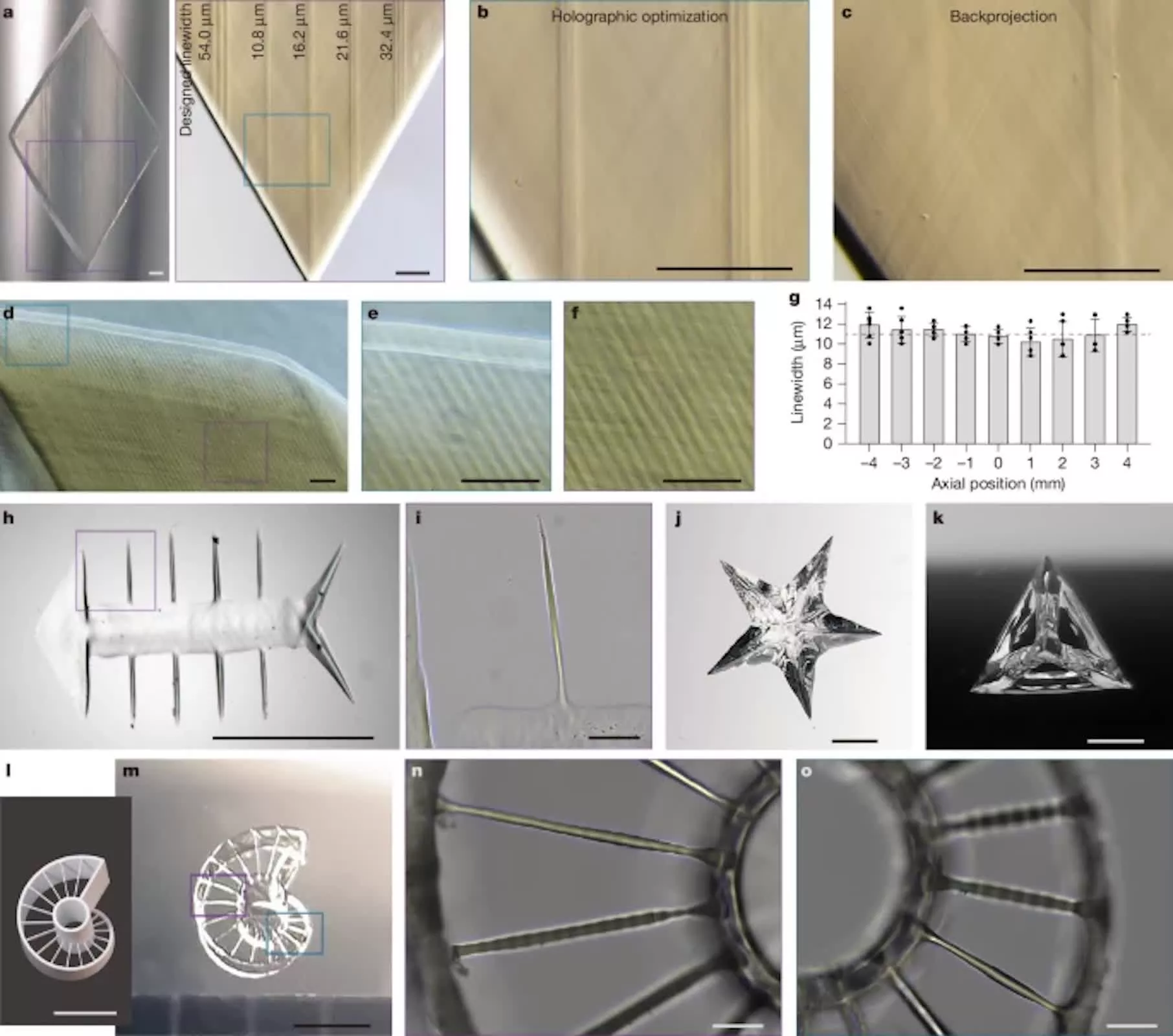
In what could be a breakthrough for drug testing, regenerative medicine, micro-robotics, and flexible electronics, a team of researchers at Tsinghua University in China reportedly developed a system that can print intricate objects at millimeter scale in less than one second. Essentially, they’re converting digital holograms into physical 3D objects. Typical extrusion-based 3D printers use precision nozzles and mechanical gantries to stack layers, which can take hours. The team’s technique, called Digital Incoherent Synthesis of Holographic light fields (DISH), solidifies an entire object at once by projecting a 3D holographic light field directly into a resin volume. Using controlled light, DISH acts more like a volumetric projector, using a high-speed, rotating periscope to project light into the resin from many angles. Then, the holographic fields overlap to form precise, complex microscale structures: no layering or waiting, and no having to choose between fast output or fine details. The team tested their technique, and say they were able to create fully formed 3D objects in only 0.6 seconds, at the same time preserving structural details down to 12 micrometers.
“The iterative optimization of the holograms for different angles in DISH maintains 19-μm printing resolution across the 1-cm range that is far beyond the depth of field of the objective and enables high-resolution in situ 3D printing of millimetre-scale objects within only 0.6 s. Acrylate materials in a range of viscosities are used to demonstrate the general compatibility of DISH. Integrating DISH with a fluid channel, we achieved mass production of complex and diverse 3D structures within low-viscosity materials, demonstrating its potential for broad applications in diverse fields,” the researchers wrote in their paper.
Aectual Rolls Out 3D Printed Ceilings and Storefronts for Lululemon
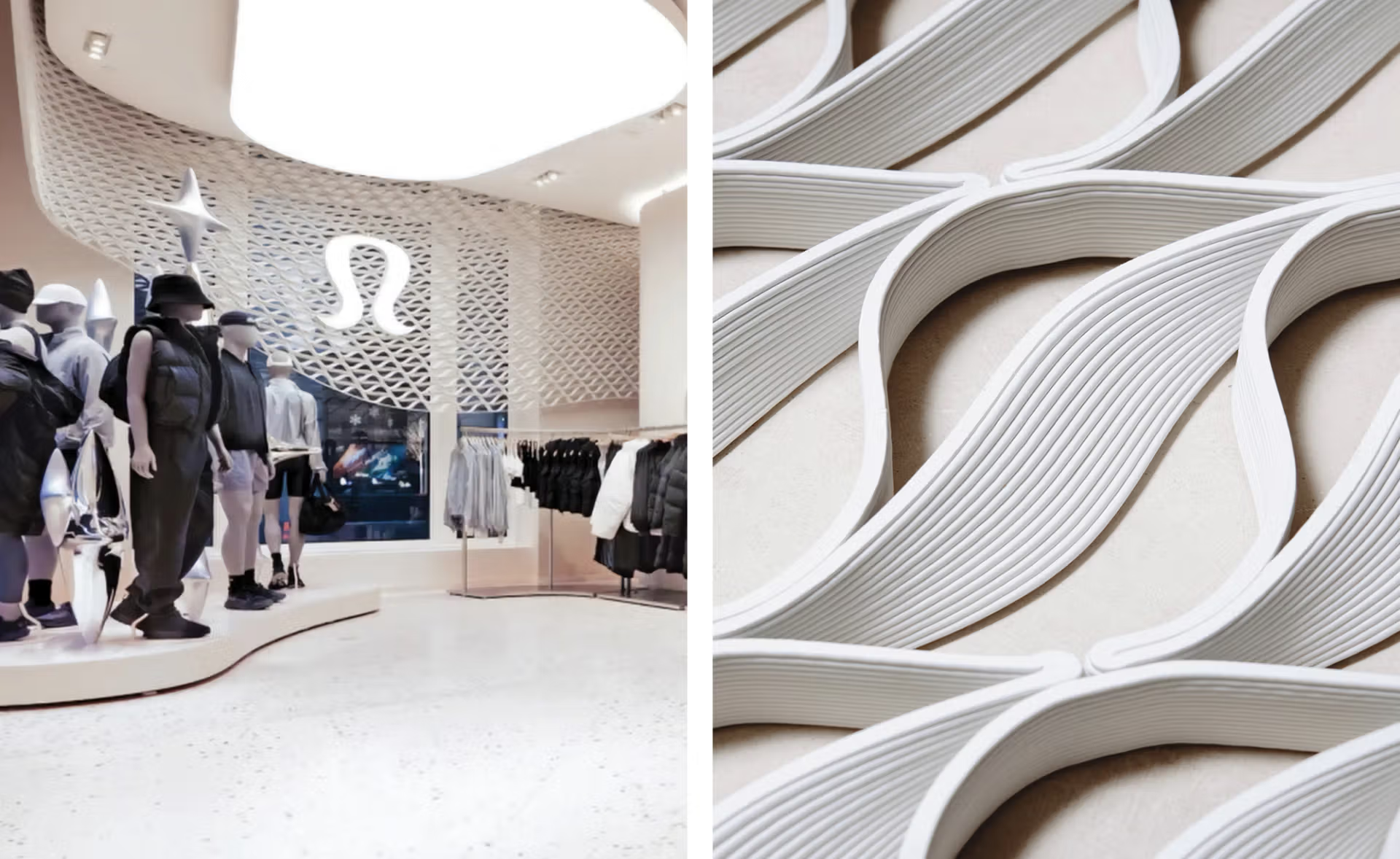
Earlier this month, we reported that the new lululemon flagship store in SoHo featured custom 3D printed benches and a display shroud. The activewear company seems to be continuing its push into the 3D printing space. Its global design team is partnering with Dutch additive design firm Aectual to develop and roll out signature 3D printed ceilings and storefront systems for some of its key stores around the world. Aectual’s custom large-scale 3D printing technology is able to fabricate double-curved architectural panels, which seamlessly connect to form continuous surfaces. The robotic system turns lululemon’s branding and design lines into a “spatial form,” and all the ceilings and storefront elements are printed using Aectual’s recycled consumer waste material blend. Whenever the ceilings and storefronts reach their end of life, they can then be returned, via Aectual’s Circular Service, and reprinted into new products. The first lululemon ceiling and storefront elements premiered in Milan, and added to the company’s SoHo location; further locations are already underway in Tokyo and Birmingham, with more to come.
“Our new store expression reflects lululemon’s commitment to creating a welcoming, dynamic retail experience, designed to celebrate our product and community. Every detail has been curated to evoke emotion and connection, with elevated materials to reflect the quality and craftsmanship of our products,” said Darin Rabb, Senior Vice President, Global Brand Creative & Experience, lululemon.