
A new report takes a closer look at how much 3D printing is actually being used in real production. The numbers point to a market that is already growing at scale and still expanding.
According to Additive Manufacturing Research (AM Research), the global value of parts produced using 3D printing could reach $110 billion annually by 2034. The findings point to a steady expansion of additive manufacturing across multiple industries, driven not just by experimentation, but by real production use.
The report, titled “AM Applications Analysis: Parts Produced 2025–2034,” focuses on something that is less frequently the focus of market reports: the actual parts. Instead of looking only at printer sales or materials revenue, the analysis tracks how many parts are being made, where they are used, and how much value they represent.
Based on AM Research’s data, parts produced with additive manufacturing are expected to generate around $24.5 billion in 2025, with consistent growth projected over the following decade.
High-Value Applications Still Lead
In metal AM, aerospace remains one of the most important sectors, particularly in terms of value. In fact, the report estimates that aerospace applications account for roughly one-fifth of global metal AM part value, reflecting the continued use of 3D printing for complex, performance-critical components. These include parts for aircraft engines, space systems, and advanced defense platforms, where weight reduction and design flexibility offer clear advantages.
Ongoing investment in both commercial aerospace and space programs continues to support this segment, reinforcing its role as a key driver of high-value applications.
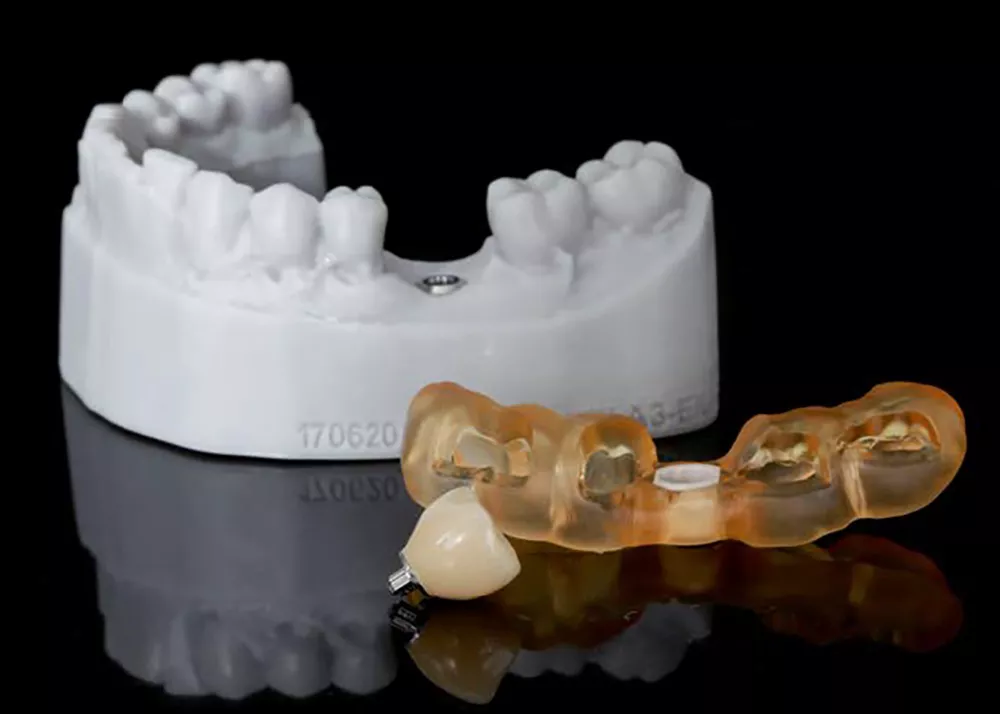
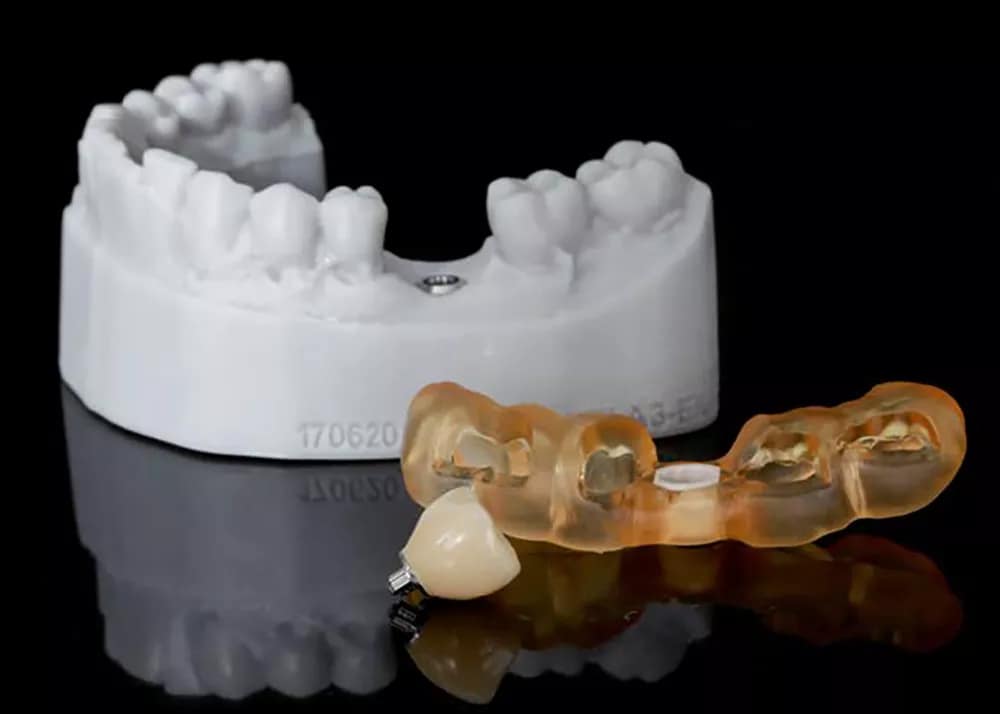
Implant prosthetics. Image courtesy of youTooth by Straumann.
While aerospace leads in value, the picture looks different when measured by volume. That’s because healthcare (and especially dental manufacturing) represents one of the largest sources of printed metal parts today. Millions of components are produced each year, including patient-specific dental restorations and medical implants.
These applications are well suited to AM because they require customization at scale, something traditional manufacturing struggles to deliver efficiently. Dental manufacturing is a clear example, with tens of millions of patient-specific parts produced annually using 3D printing.
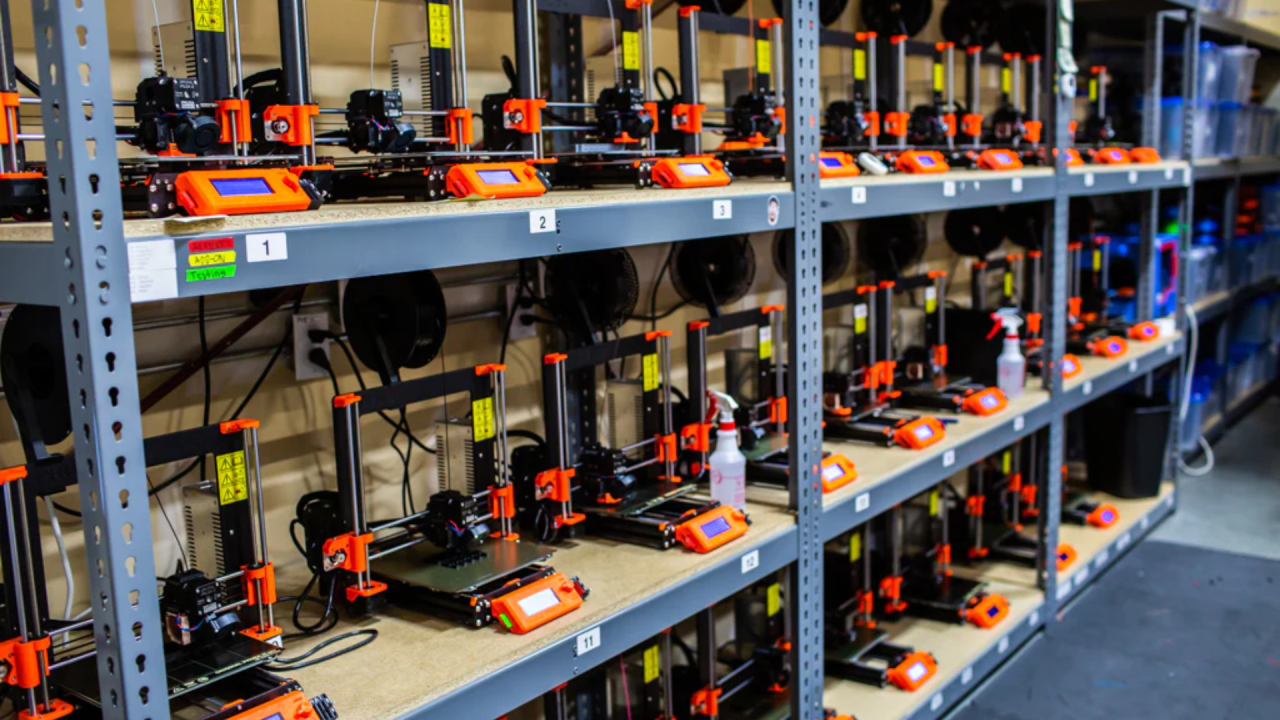
Unlocking the Full Potential of Prusa i3. Image courtesy of Prusa.
Growth is also accelerating on the polymer side, though for different reasons. Rather than high-value components, polymer 3D printing is being driven by volume and accessibility. The wider availability of lower-cost and desktop material extrusion systems, along with the rise of print farms, has made it possible to produce large quantities of functional parts at relatively low cost.
These parts range from industrial components to consumer products, contributing significantly to overall market growth even when individual part value is lower.
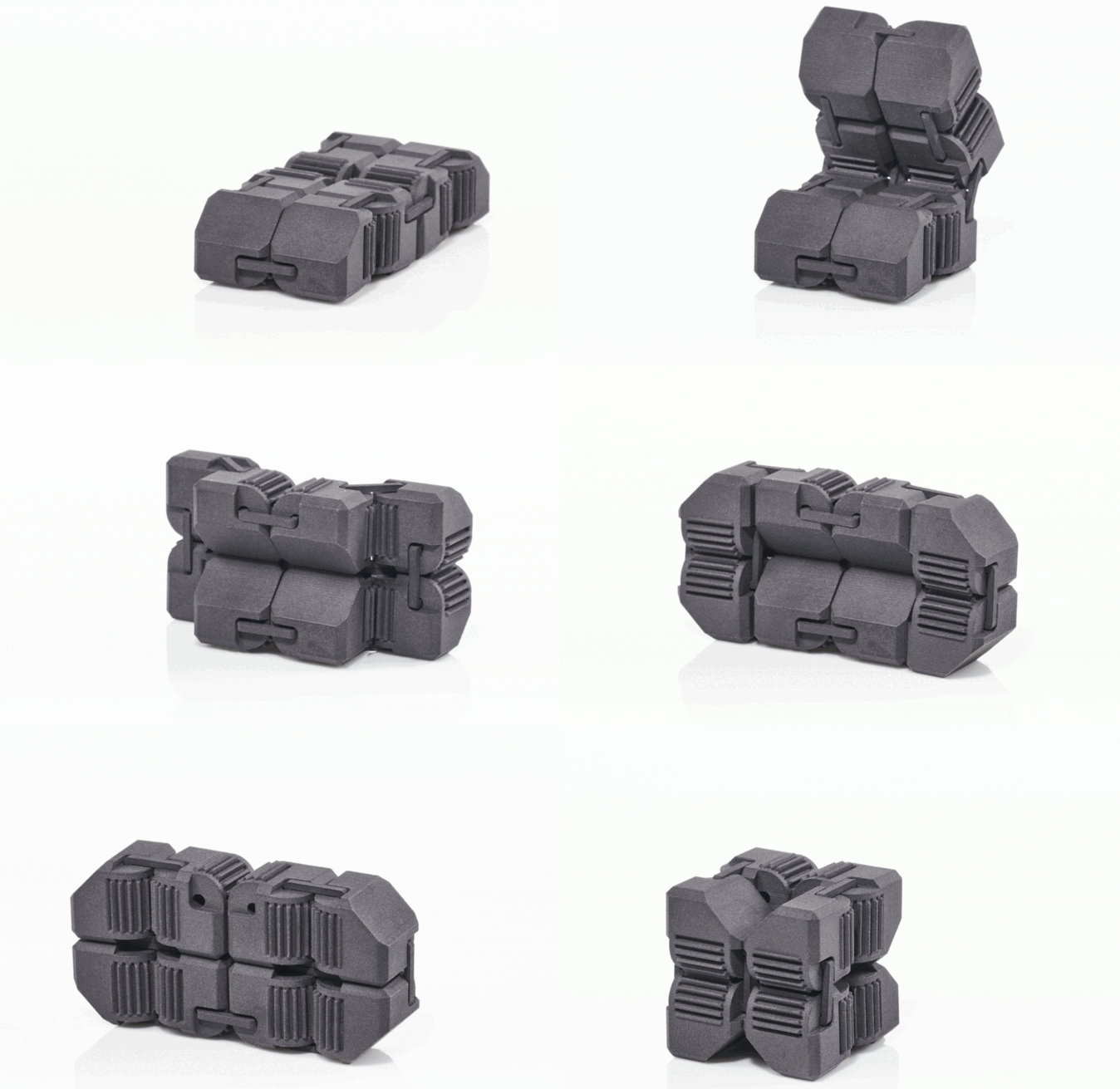
3D printed polymer component. Image courtesy of Basso.
A More Mature Phase for AM
Overall, the data shows an industry that is becoming more focused on real-world use. So instead of focusing on what the technology could do, companies are using AM where it clearly adds value, whether through design flexibility, supply chain benefits, or customization.
This change is happening at different speeds across industries, but the direction is clearly that additive manufacturing is no longer just about prototyping. It is gradually becoming a production tool in specific, high-value applications.

Additive Manufacturing Research Executive Vice President of Research Scott Dunham at the AMS event.
For manufacturers, investors, and suppliers, understanding where AM is actually working is becoming more important than broad market projections.
By looking at part production across industries, AM Research’s report gives a clearer view of where adoption is already happening, and where it may grow next.
These findings will be discussed in more detail during an upcoming AM Research webinar later this month, where the firm will share finalized 2025 data and its outlook for 2026.
The full Applications Analysis report is available through AM Research.
Scott Dunham, the report’s author and Executive Vice President of Research at AMR, recently shared some of these findings at the Additive Manufacturing Strategies (AMS) conference in New York. He will continue the discussion in an upcoming AM Research webinar, where he’ll take a closer look at 2025 market data and what to expect in 2026.