
Velo3D (Nasdaq: VELO) is moving further into production-focused 3D printing, with growing demand from defense and aerospace customers shaping its strategy. The company is shifting beyond selling machines toward producing parts at scale, backed by new contracts, stronger partnerships, and a clearer long-term plan to expand capacity. At the same time, it is working to stabilize its finances, improve margins, and support growth as more programs move into production.
In 2025, Velo3D reported full-year revenue of $46 million, up from $41 million in 2024. The company ended the year with a backlog of $31 million, pointing to some strong demand heading into 2026. For the fourth quarter, revenue came in at $9.4 million, down from $12.6 million in the same period the year before.
“In the fourth quarter, we achieved record bookings and built a backlog of approximately $31 million, which we believe is clear evidence that demand is not only strong but accelerating. This momentum gives us high confidence as we look ahead to 2026 and beyond. We believe that what’s driving this growth is not just adoption, it’s reliance. Our technology has become mission-critical,” Velo3D CEO Arun Jeldi told investors during an earnings call.
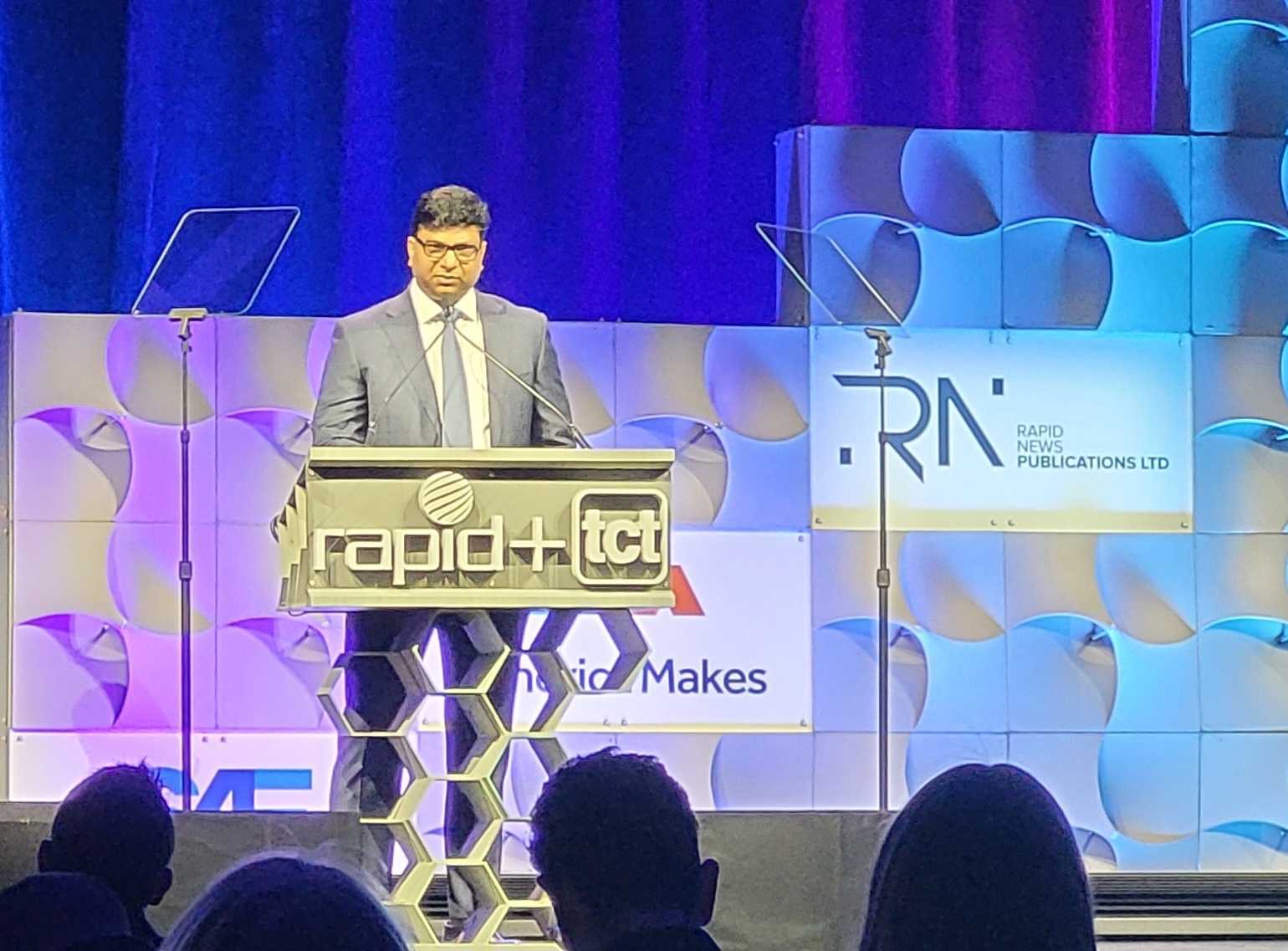
Velo3D’s Arun Jeldi at Rapid+TCT. Image courtesy of Velo3D.
But despite growth, profitability remains a challenge. Velo3D posted a full-year net loss of $71.4 million, a bit larger than the $69.9 million loss in 2024. Gross margins were negative for both the quarter and the year, due to a $7 million inventory write-down and production delays during a government shutdown.
That performance was not well received by the market. The day after the earnings release, Velo3D’s stock dropped more than 20% despite gains in the broader market, as investors reacted to the results and the company’s outlook for 2026. Still, even with the decline, the stock remains higher than a year ago, roughly 330%.
At the same time, the company is making progress on its cost structure. Operating expenses dropped to $47.5 million in 2025, down from $76.8 million the year before. On an adjusted basis, losses improved, showing that Velo3D is becoming more efficient while still investing in growth.
At the same time, Velo3D is making changes to its leadership team as it gets ready for the next phase. The company announced the appointment of James Suva as Chief Financial Officer, effective April 6, 2026. He will replace Bernard Chung, who has been serving as acting CFO and will remain with the company as Controller. Suva most recently served as Senior Vice President and Treasurer at Cricut, and will oversee finance, accounting, treasury, and investor relations.
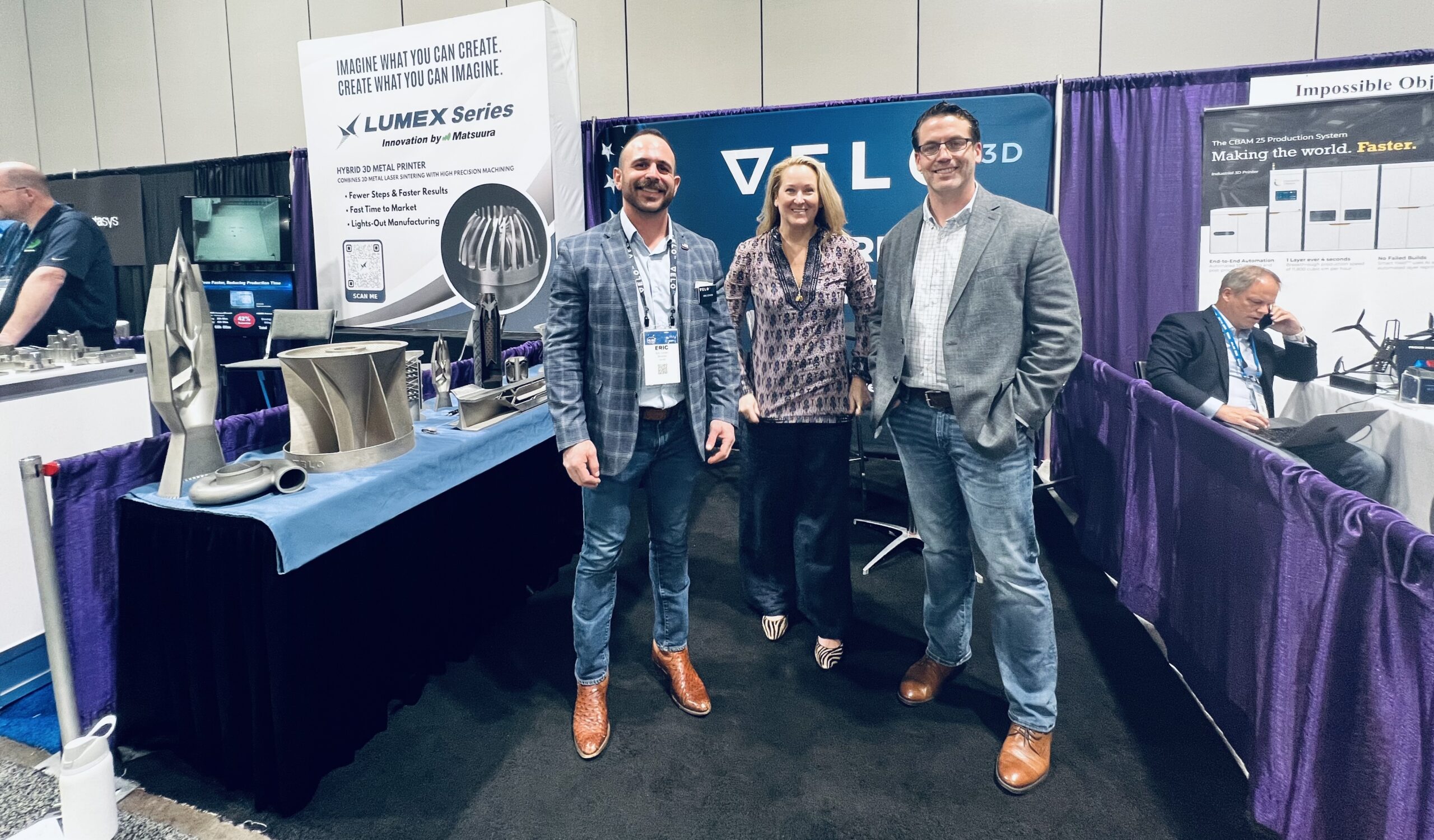
Velo3D team at MILAM 2026: Eric Cohen (Sales Director), Michelle Sidwell (CRO), Brice Cooper (VP of Defense). Image courtesy of 3DPrint.com.
One of the biggest changes is in how the company makes money. While machine sales still drive most revenue today, Velo3D is pushing its Rapid Production Solutions (RPS) business, which focuses on producing parts directly for customers. In 2025, RPS accounted for roughly 10% to 15% of revenue, but the company expects that share to grow quickly and eventually become the main part of the business.
More importantly, that shift is tied to what’s happening in the market. According to Jeldi, customers, especially in defense and aerospace, are no longer just testing additive manufacturing; they are adopting it. They are starting to rely on it. Programs are moving into production, and once they scale, demand can grow fast, sometimes requiring multiple systems within months.
This is already showing up in new contracts. In 2025, Velo3D secured a $32.6 million agreement tied to Project FORGE and an $11.5 million multi-year production contract with a defense contractor. It also became the first additive manufacturing company qualified under the U.S. Army’s Ground Vehicle Systems Center initiative, a step that could open the door to broader adoption in military programs.
“Across defense and aerospace, we are seeing a structural shift. Customers are demanding faster, more localized, and more resilient supply chains. Programs are no longer staying in development. They’re scaling into production. They’re doing so rapidly. We believe this creates a compounding demand effect. Programs that begin with a single system are quickly expanding to multiple systems, sometimes within months. As volumes increase and new programs come online, demand just doesn’t grow; it accelerates,” Jeldi told investors.
At the same time, the company strengthened its balance sheet. Velo3D raised $30 million through a private placement and converted $15 million of debt into equity, reducing its total debt by about 60%. Cash rose to $39 million at the end of the year, up from $1.2 million a year earlier.
Looking ahead, Velo3D expects revenue of $60 million to $70 million in 2026 and aims to achieve positive EBITDA in the second half of the year. Management also expects margins to improve as production scales, with gross margins projected to exceed 30% later in the year.
The longer-term plan is more ambitious. Velo3D plans to build up to 400 production systems over the next decade as demand grows. As customers move into production, they need more machines, which in turn drives further growth, the CEO explained.
Further detailing that “The investments we are making in 2026 in manufacturing infrastructure, supply chain optimization, and workforce represent the critical first phase of that build out. We expect to provide periodic updates on capacity milestones as we execute against this plan.”
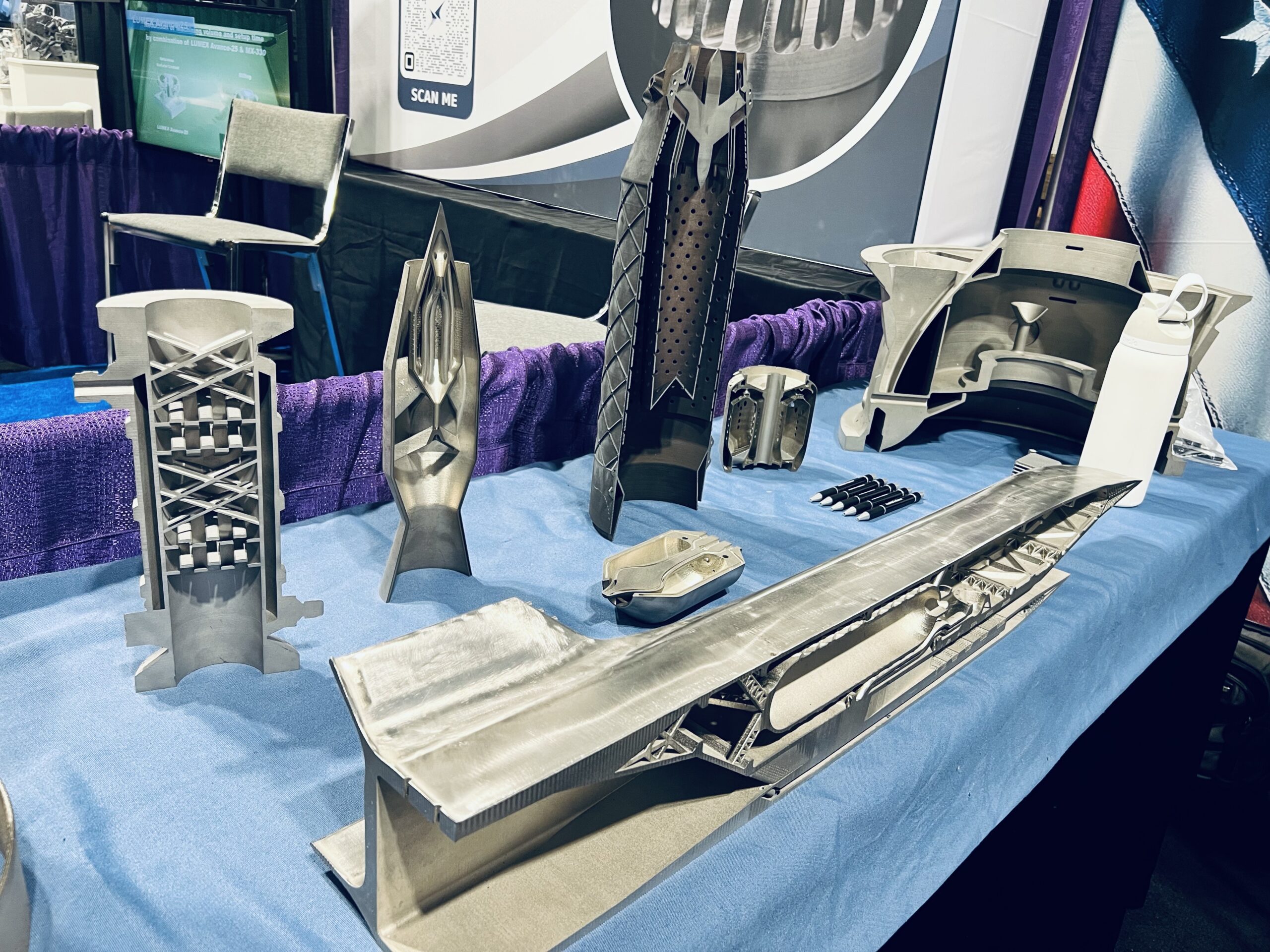
Velo3D’s booth at MILAM 2026. Image courtesy of 3DPrint.com.
Beyond hardware and parts, the company is also looking at data as a future business. As more systems are used, Velo3D expects to collect manufacturing data that can help improve designs, optimize production, and support new revenue over time. In fact, Jeldi told investors the company wants to build a data and analytics platform that customers rely on, similar to Amazon’s cloud-based model, Amazon Web Services (AWS).
“We have a strong focus on the business for the next five years, where Velo will be the AWS of data and analytics company and a product-based company at a defense level, which is what you see as the base of start. What you see in the next seven years is the vision of Velo, where Velo will make sure that we are ready for the next generation manufacturing and digital platforms, which are very siloed at this point and do not have access to all the things I’m talking about,” Jeldi said, outlining the company’s long-term vision.